September–October (golden harvest) or March–May (spring flowers)
$30-120 USD
Vietnamese; ethnic minority languages in villages (English in tourist areas)
Vietnamese Dong (VND)
Overview
About Sapa
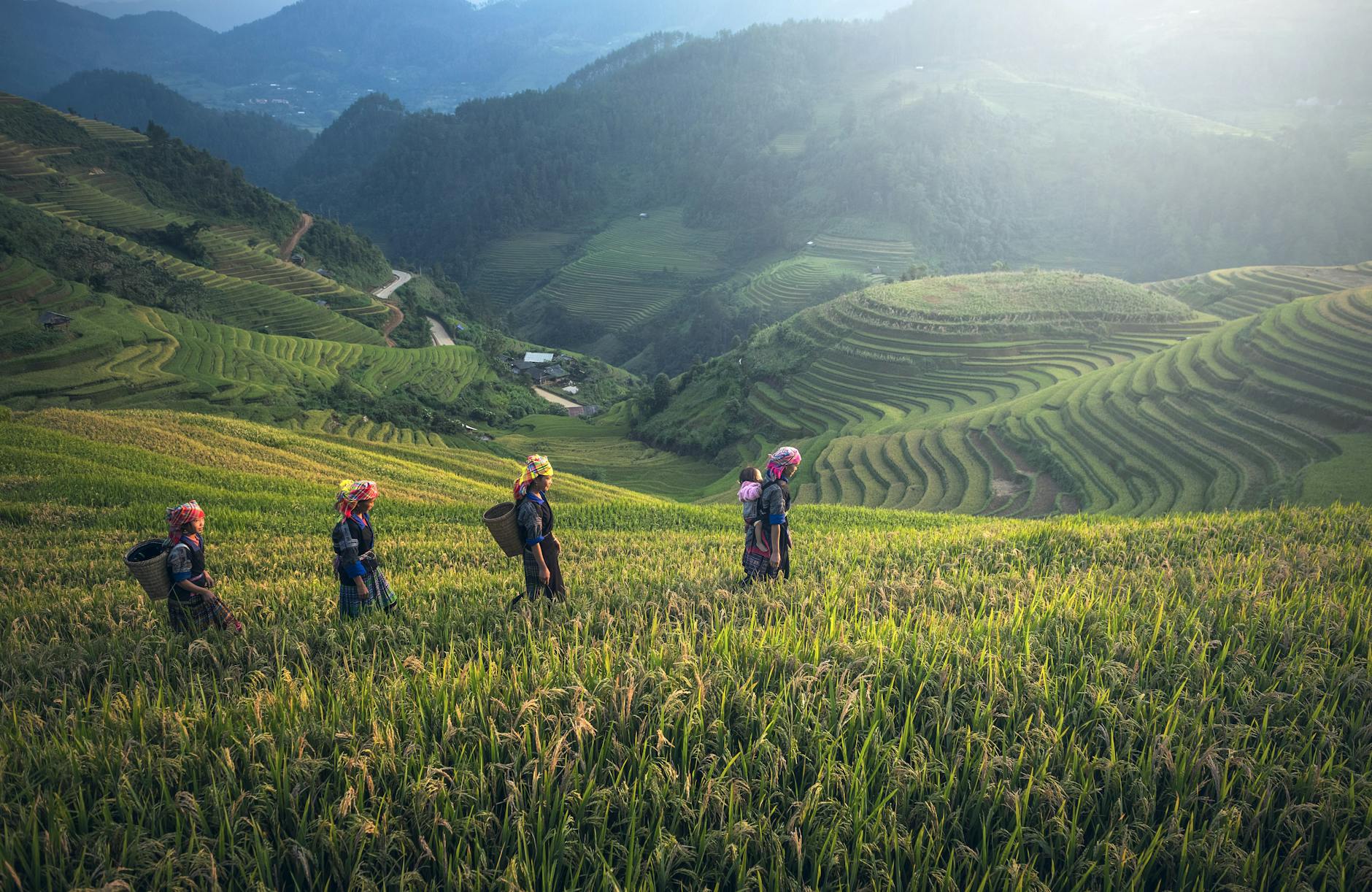
Sapa is a highland town in Lao Cai Province in the far north of Vietnam, sitting at an altitude of approximately 1,600 metres above sea level in the Hoang Lien Son mountain range. The town and its surrounding valleys are among the most visually dramatic landscapes in Southeast Asia, with tiered rice terraces carved into steep slopes, mist-draped mountain peaks, and a patchwork of ethnic minority villages inhabited by the Black Hmong, Red Dao, Tay, Giay, and Xa Pho peoples.
The landscape takes on different characters across the seasons. September and October are widely considered the finest months to visit, when the rice terraces ripen to a deep gold before harvest, bathing the valley in warm colour. Spring from March to May brings fresh green paddies and wildflowers. Winter from December to February can bring frost and occasional snowfall at the highest elevations, while summer sees lush growth and occasional cloud inversion events where the valleys fill with sea-like mist below the hilltops.
The main draw for most visitors is trekking through the Muong Hoa Valley and its tributary paths, which lead through villages such as Lao Chai, Ta Van, Y Linh Ho, and Ta Phin. Routes range from easy half-day walks to multi-day treks requiring a local guide. Spending a night in a village homestay, eating home-cooked food and participating in daily life, is a highlight for many travellers and provides a meaningful alternative to the town's growing number of hotels.
Fansipan, the highest peak in Indochina at 3,143 metres, rises to the southwest of Sapa. It can be reached either by a challenging two-to-three-day guided trek through dense forest, or in approximately 15 minutes via the Sun World Fansipan Legend cable car, which is listed among the world's longest non-stop cable cars. The summit area has been developed with pagodas and monuments that attract large numbers of Vietnamese pilgrims and tourists.
Sapa town itself has grown rapidly, with an increasing number of hotels, restaurants, and shops catering to both domestic and international visitors. The weekly Sapa market remains a hub for ethnic minority communities who travel in from surrounding valleys. Lao Cai, the nearest sizeable city and railway junction, is 38 km away and connected to Hanoi by overnight train in approximately eight hours.
Accommodation
Where to Stay in Sapa


Experiences
Things to Do in Sapa
Fansipan Summit via Sun World Cable Car
A scenic cable car ride on the Sun World Fansipan Legend cable car — one of the world's longest non-stop cable cars at 6.3 km — ascending to near the summit of Fansipan at 3,143 metres, the highest peak in Indochina. At the top, a series of Buddhist pagodas and the iconic summit marker await, with panoramic views across the Hoang Lien Son range on clear days.
Fansipan Peak Multi-Day Trekking Challenge
A two-to-three-day guided trek to the summit of Fansipan through dense primary forest and alpine meadows in Hoang Lien National Park. The route requires a permit and an experienced guide, and involves camping overnight on the mountain. A serious achievement for fit trekkers.
Muong Hoa Valley Trek to Lao Chai and Ta Van
A guided half or full-day trek through the terraced rice fields of the Muong Hoa Valley, visiting the Black Hmong village of Lao Chai and the Giay village of Ta Van. The route follows paths through paddy fields and bamboo groves with a local guide who can communicate with village residents and share cultural context.
Overnight Homestay in an Ethnic Village
A one or two-night stay in a traditional wooden home in a Black Hmong or Red Dao village outside Sapa, sharing meals with a local family, learning about traditional weaving and dyeing techniques, and sleeping on elevated platform beds. One of the most authentic and memorable experiences available in northern Vietnam.
Cat Cat Village Walk
A self-guided or guided walk from Sapa town down to Cat Cat Village, a Black Hmong settlement 15 minutes from town that is known for its traditional weaving demonstrations, a modest waterfall, and well-preserved examples of local architecture. The most accessible village from town and a good introduction to the area.
Ta Phin Village and Red Dao Herbal Bath
A guided excursion to Ta Phin, a predominantly Red Dao village about 12 km from Sapa, followed by a traditional herbal bath prepared using mountain plants gathered by the village women. The bath is reputed to be deeply relaxing and medicinal, and is a distinctive cultural wellness experience.
Sapa Market and Town Exploration
A self-guided or guided exploration of Sapa town's weekly markets, where ethnic minority groups from surrounding valleys gather to trade goods, textiles, and produce. The Saturday night Love Market, where young people from different communities meet and socialise, is a particularly lively event.
Rice Terrace Photography Tour at Sunrise
An early morning photography outing led by a local guide to the most photogenic terrace viewpoints in the Muong Hoa Valley, timed to catch the mist rising over the fields at first light. Particularly rewarding in September and October when the paddies are heavy with golden grain.
Practical Info
Sapa Travel Tips
Airport
LCA (Lao Cai, 38km) / HAN (Hanoi, ~320km)
Timezone
UTC+7
Currency
Vietnamese Dong (VND)
Population
65,000 (Sapa town and district)
Information
Frequently Asked Questions
What is the best time to visit Sapa?
How do I get to Sapa from Hanoi?
Do I need a guide to trek in Sapa?
What is the Fansipan cable car experience like?
What are ethnic minority homestays in Sapa like?
Is Sapa worth visiting without trekking?
What should I pack for a Sapa trip?
Do I need a visa to visit Vietnam?
Ready to explore Sapa?
View all hotels, activities, and detailed information on our full Sapa destination page.
Explore Sapa