The town rose to international fame after Elizabeth Gilbert's memoir Eat Pray Love, yet it has retained a genuine artistic identity that predates the book by centuries. Ubud has been a centre of Balinese painting, woodcarving, batik, and silverwork since the early twentieth century, when Dutch artist Walter Spies and later Australian artist Donald Friend settled here and helped establish its reputation as a creative hub. Today the streets are lined with galleries, craft workshops, and small family compounds where artisans continue techniques passed down through generations.
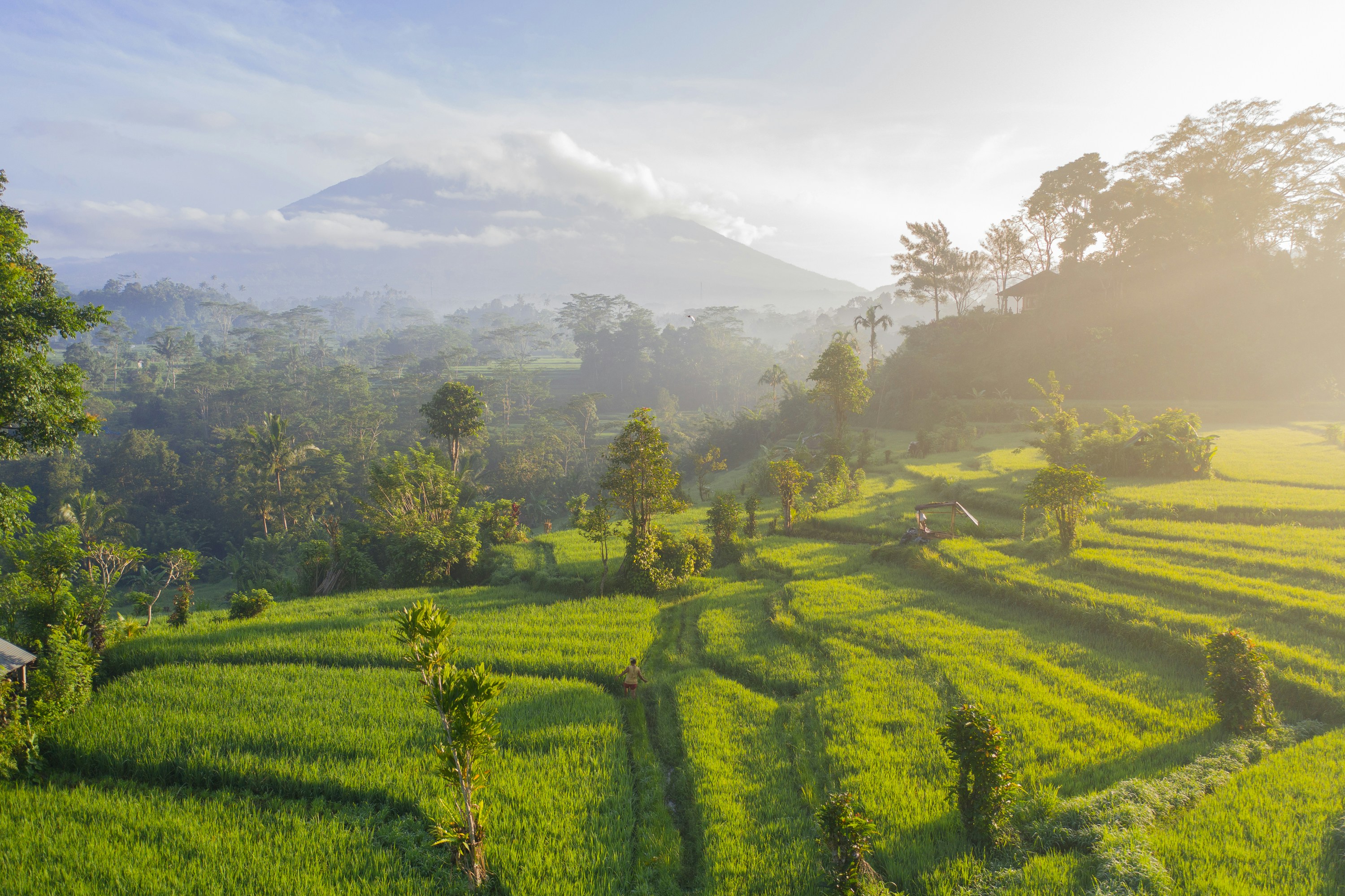
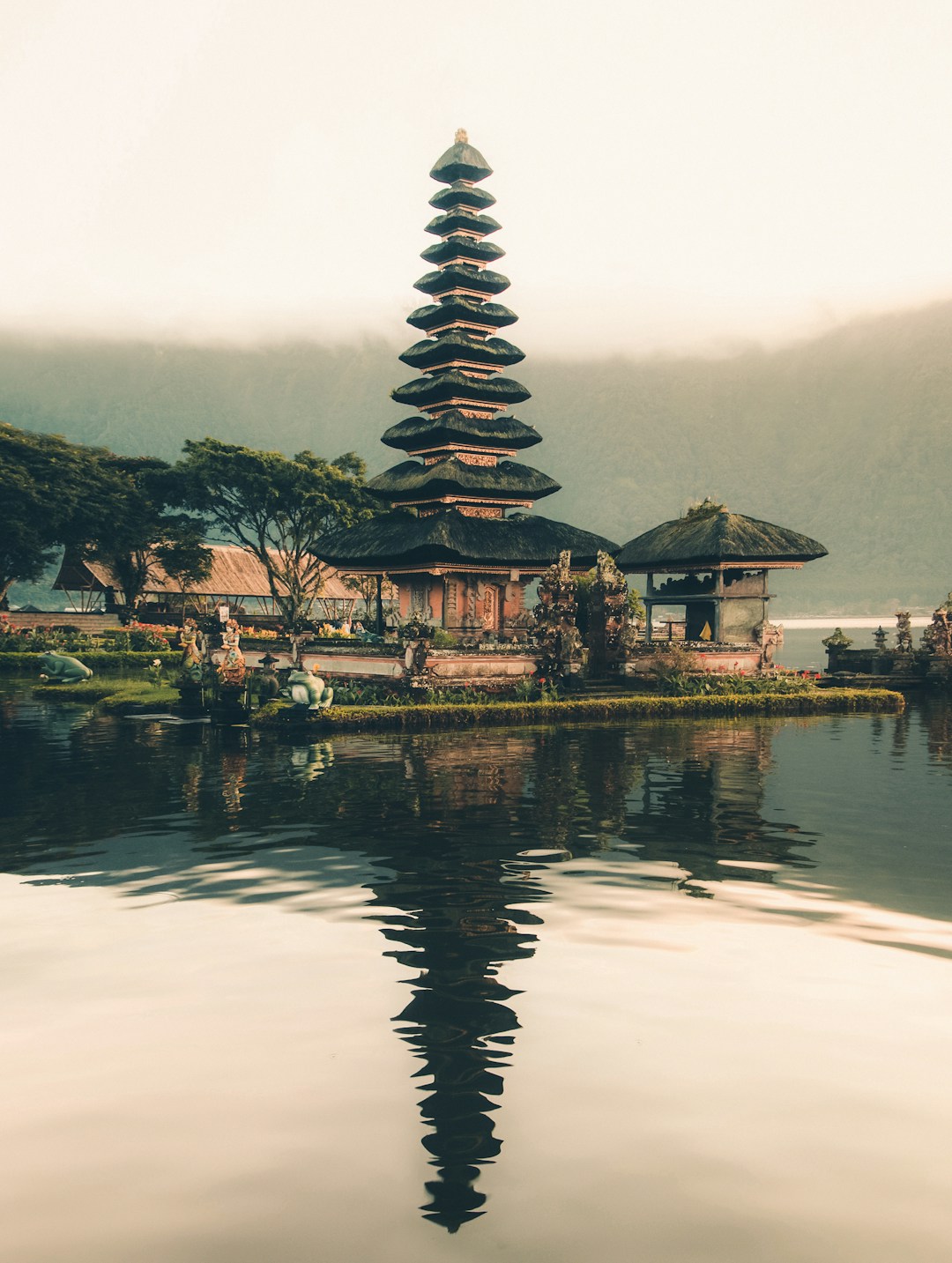
The surrounding countryside is defined by the iconic Tegallalang rice terraces, whose stepped green fields tumble down river valleys carved by the Campuhan River. Further afield, the sacred volcano Mount Batur looms to the north, offering one of Bali's most rewarding pre-dawn treks. The ancient Hindu temples of Tirta Empul, Goa Gajah, and Pura Luhur Batukaru dot the landscape, each playing an active role in the Balinese calendar of ceremonies.
Ubud's wellness scene has expanded enormously, drawing visitors for yoga retreats, Ayurvedic treatments, and traditional Balinese healing practices. The town is also a respected culinary destination, with farm-to-table restaurants, cooking classes, and vibrant warung stalls showcasing the layered flavours of Balinese cuisine.
For accommodation, Ubud offers a remarkable range: ultra-luxury tented camps perched above river gorges, serene rice-field villas, family-run homestays, and contemporary boutique hotels. Most properties are smaller and more intimate than the mega-resorts found along Kuta or Seminyak's coastlines, reflecting the town's emphasis on tranquillity and connection with nature.
The best time to visit is during the dry season from April to October, when blue skies and low humidity make outdoor activities and trekking most enjoyable. Even during the wet season from November to March, Ubud remains lush and beautiful, with rain typically falling in afternoon bursts rather than all day.