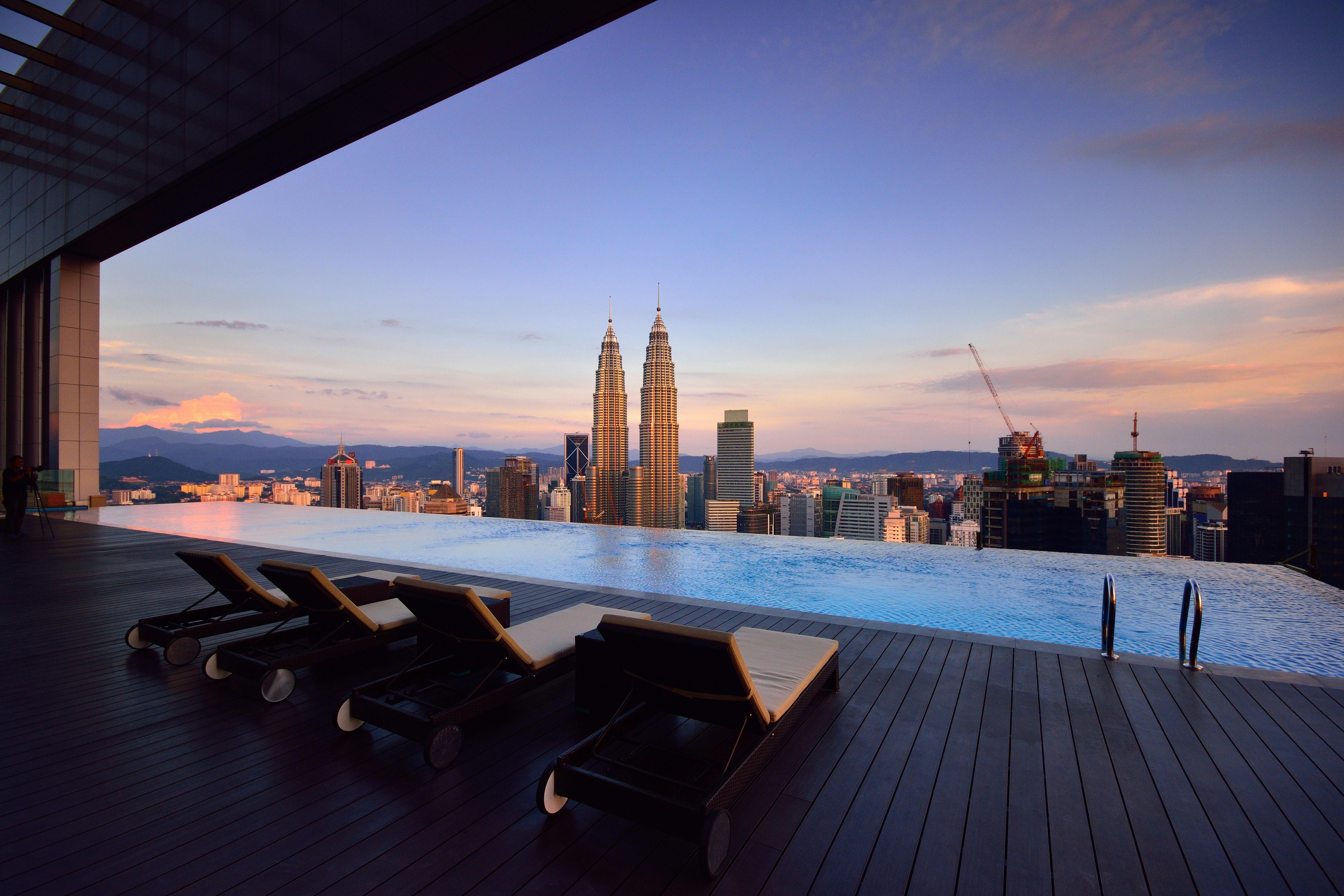
Sunset at the Kota Kinabalu waterfront, Borneo

Malaysia

Kota Kinabalu

Updated

At a glance

Kota Kinabalu at a glance

Kota Kinabalu, the capital of Sabah state on the northwestern coast of Borneo island, is one of Malaysia's fastest-growing cities and a primary gateway to some of the most biodiverse landscapes on earth. The city sits on the South China Sea, bordered to the east by a mountainous interior that includes Mount Kinabalu - at 4,095 meters, the highest peak in Southeast Asia outside the Himalayas and part of a UNESCO World Heritage Site.

Where is Kota Kinabalu?

Kota Kinabalu is in Malaysia, Southeast Asia, about 1,630 km east of Kuala Lumpur in a straight line. Its coordinates are 5.9804° N, 116.0735° E.

Kota Kinabalu quick facts
Best time to visitMarch to September (drier season; Mount Kinabalu climbs are best April to August)
Daily budgetUS$40-120 per day
CurrencyMalaysian Ringgit (MYR)
Nearest airportBKI (Kota Kinabalu International Airport)
LanguageMalay and English (Kadazan-Dusun and Bajau widely spoken locally)
Time zoneUTC+8
Population628,000

Entry rules vary by passport. Check our Southeast Asia visa requirements guide.

About

Why visit Kota Kinabalu?

The city itself is a functional modern hub with a compact downtown that transitions quickly into seafront esplanades and ferry terminals. The offshore Tunku Abdul Rahman Marine Park, five minutes by speedboat from Jesselton Point, encompasses five islands with coral reefs, white sandy beaches, and opportunities for snorkeling and scuba diving. The park is the most accessible beach destination for visitors staying in Kota Kinabalu.

Sabah's indigenous heritage distinguishes it from Peninsular Malaysia. The state is home to more than 30 ethnic groups, including the Kadazan-Dusun, Bajau, Murut, and Rungus peoples, each with distinct languages, customs, and crafts. Cultural villages such as Mari Mari and Koisaan offer organized introductions to traditional practices including blowpipe use, fire-starting, rice-wine brewing, and traditional dance. The Sabah State Museum provides broader historical context.

The Gaya Street Sunday Market is one of the city's most popular attractions - a weekly morning market where local produce, handicrafts, clothing, and food stalls crowd the length of a colonial-era street. The Central Market and Handicraft Market near the waterfront are good spots for Sabahan textiles, beadwork, and food products.

Kota Kinabalu has a well-developed tourism infrastructure built around nature-based travel. Adventure operators run white-water rafting trips on several rivers at varying difficulty levels. Proboscis monkey spotting boat tours along the Klias and Kawa Kawa rivers are popular evening excursions. Day trips to Kinabalu Park require advance booking for summit climbers, while the lower-altitude botanical gardens and rainforest trails are accessible without registration.

The city's sunsets are a noted attraction. Views from Tanjung Aru beach, Waterfront Esplanade, or any high-rise hotel bar looking west over the South China Sea are frequently cited as among the finest in Malaysia.

When to Go

When is the best time to visit Kota Kinabalu?

Kota Kinabalu (“KK”) is tropical and warm year-round (26-32 °C), sitting just outside the typhoon belt - one reason it's known as the “Land Below the Wind.” The drier months from March to September are best overall, and the prime window for climbing Mount Kinabalu is April to August.

  • Apr-AugThe driest, clearest months - ideal for the Mount Kinabalu climb, island-hopping and diving. Book climbs months in advance.
  • Mar & SepShoulder months - good value, warm and mostly fine, with the occasional shower.
  • Oct-FebThe wetter monsoon - humid with heavier rain, though KK avoids the worst typhoons. Quieter and cheaper.

Seasonal things to know

  • Kinabalu permits: The mountain is open year-round, but only around 130 climbers are allowed per day. Book at least 2-3 months ahead, especially for June-August and Malaysian school holidays, when permits are hardest to get.
  • Diving & snorkelling: Visibility is best from April to October. November to March can bring reduced visibility from plankton blooms, and September to November has a higher chance of rough seas affecting island trips.
  • Rain: Short tropical downpours can happen in any month, usually in the late afternoon. They pass quickly and rarely ruin a full day.
  • Tamu (market) days: Many villages hold weekly tamu markets on rotating days - ask locally for the schedule.

Attractions

Things to Do in Kota Kinabalu

KK, the capital of Sabah in the Borneo half of Malaysia, is the launchpad for the island's greatest adventures - summiting Mount Kinabalu, diving coral reefs and tracking orangutans - plus a likeable waterfront city of sunset bars, markets and islands you can see from the shore. Three to five days covers the essentials.

Tunku Abdul Rahman Marine Park

Five coral-fringed islands a 15-20-minute boat ride from the city jetty - Gaya, Manukan, Sapi, Mamutik and Sulug. Snorkel over reefs, walk jungle trails or just lie on white sand with a view back to the city. The easiest tropical-island day trip in Southeast Asia.

  • Gaya: The largest island, covered in dense forest - good for jungle walks, with excellent snorkelling on the reef off Police Beach.
  • Manukan: The most developed, with good facilities, a walking trail to a viewpoint and white-sand beaches. Great for families, but busy on weekends.
  • Sapi: Arguably the best snorkelling, with clear water and coral right off the beach. Crowded on weekends; monitor lizards roam the shore.
  • Mamutik: The smallest and often the quietest - good coral, a relaxed vibe and a nice swimming beach.
  • Sulug: The least developed, with minimal facilities. Best for experienced snorkellers and divers who want fewer crowds - bring your own food and water.

Park entry ~23 MYR (~$5); return ferry ~30-50 MYR (~$7-11), or ~17-25 MYR (~$4-5) per island hop from Jesselton Point; full-day packages covering 2-3 islands ~40-70 MYR (~$9-15). Snorkel rental ~10 MYR; intro dives ~150-250 MYR. Parasailing, jet skiing and sea walking are also available.

Mount Kinabalu Climb

At 4,095 m the highest peak between the Himalayas and New Guinea, and a UNESCO World Heritage two hours from KK. The standard two-day climb ascends to a mountain hut at Laban Rata, summits at dawn and descends the same day. Challenging but achievable for fit walkers - no technical climbing. A permit and a guide are mandatory and quotas are tight.

The trail starts at Timpohon Gate (1,866 m) and climbs through five distinct vegetation zones - from lowland rainforest to montane alpine meadows to bare granite - to Laban Rata (3,272 m), where you sleep in a mountain hut. You wake around 2:00 AM for the pre-dawn push to Low's Peak (4,095 m) to catch sunrise above the clouds. For extra thrills, the world's highest via ferrata starts at 3,400 m and traverses the granite face on fixed cables, rungs and bridges - no climbing experience needed, but a head for heights is essential.

All-in climb packages from ~1,800-2,500 MYR (~$420-580); book months ahead via licensed operators. The permit itself is ~200 MYR (~$43) for foreigners, plus park entry (15 MYR) and insurance (7 MYR), with Laban Rata accommodation from ~60-200+ MYR. Book through Sutera Sanctuary Lodges - permits are capped at ~130 per day and sell out weeks or months ahead. If they're gone, you can still do day hikes and the canopy walkway in Kinabalu Park without a climbing permit.

Kinabalu Park & the Poring Hot Springs

Even non-climbers should visit the park - a wonderland of montane forest, carnivorous pitcher plants and orchids around the mountain base. Combine it with Poring, lower down, for the canopy walkway, butterfly farm and steaming mineral hot springs.

The park headquarters sits at 1,520 m near Kundasang, about 1.5-2 hours from KK. Highlights include the easy 30-minute botanical garden trail (pitcher plants, wild orchids and rhododendrons), a canopy walkway 40 m above the forest floor for bird watching, the mountain garden with the giant pitcher plant Nepenthes rajah, and the scenic Liwagu river trail. Poring is another 40 minutes past HQ, with Japanese-style open-air mineral baths - perfect for tired legs - a tropical garden and one of the world's longest canopy walkways at 157 m.

Park entry ~15 MYR (~$3.50); Poring canopy walk ~5 MYR (~$1.15); HQ canopy walkway ~5 MYR. Day-trip packages with transport ~120-180 MYR (~$26-38).

Sunset at the Waterfront & Signal Hill

KK has some of Southeast Asia's best sunsets - the sky igniting behind the islands. Watch from the waterfront boardwalk and night market, or ride up the Signal Hill Observatory for the panoramic view. Free and unforgettable.

Signal Hill is a short walk or 5-minute Grab from the centre and overlooks the city, waterfront and marine-park islands. Free; best from 5:30-6:30 PM.

Tanjung Aru Beach & Night Market

The place to watch the sunset in KK - locals and visitors gather on the sand and the promenade steps as the sky over the South China Sea turns orange, red and purple. Swim, stand-up paddleboard or join a beach volleyball game, then graze the weekend night market stalls for mi goreng, satay, fresh coconut shakes and Sabahan snacks.

Free. Most night-market items ~1-3 MYR (~$0.20-0.65).

Kota Kinabalu City Mosque (Floating Mosque)

Masjid Bandaraya Kota Kinabalu sits on a man-made lagoon and appears to float - especially at high tide and sunset. Its blue dome and minarets make it one of Sabah's most photographed landmarks. Visitors are welcome outside prayer times, robes and headscarves are provided at the entrance, and you can rent a paddle boat (~5 MYR) for photos from the water.

Free. 8:00 AM-5:00 PM, closed during prayer times. Late afternoon has the best light.

Gaya Street Sunday Market

Running for over 100 years, this weekly market turns Gaya Street into a pedestrian zone every Sunday morning. Browse batik fabrics, handmade crafts, local coffee, tropical fruit and street food, and pick up souvenirs like wooden carvings, pearl jewellery, woven baskets and Sabahan snacks - often to live music.

Sundays ~6:00 AM-1:00 PM. Go before 9 AM for the best selection and cooler temperatures, and bring cash.

Sabah State Museum & Heritage Village

On a hilltop 10 minutes from the centre, the museum is an excellent introduction to Sabah's history, ethnography, natural history and ceramics. Outside, the Heritage Village has full-scale traditional houses of different ethnic groups, and the same grounds hold a Science & Technology Centre, an Art Gallery and the Islamic Civilisation Museum.

~15 MYR (~$3). 9:00 AM-5:00 PM, closed Fridays.

Kawa Kawa Firefly Cruise

One of Borneo's most magical outings. About two hours from KK near Tuaran, a late-afternoon cruise on the Kawa Kawa River spots proboscis monkeys and long-tailed macaques in the mangroves. After a village dinner you head back out after dark to see thousands of fireflies flashing in sync along the riverbanks.

~180-220 MYR (~$38-47) including transport and dinner; ~6 hours, returning around 9 PM.

Lok Kawi Wildlife Park

About 30 minutes south of KK, this 280-acre park combines a zoo and a botanical garden - the easiest way to see Borneo's iconic animals without a jungle trek. The Bornean pygmy elephant and orangutan enclosures are the highlights, alongside proboscis monkeys, sun bears and tigers.

~20 MYR (~$4) adults, ~10 MYR (~$2) children. Daily 9:30 AM-5:30 PM.

Tip of Borneo Day Trip

About three hours north in the Kudat district, Tanjung Simpang Mengayau is where the South China Sea meets the Sulu Sea - a dramatic headland with panoramic ocean views. En route, stop at a Rungus longhouse for a taste of village life, visit honey bee farms and relax on the beaches near Kudat.

Guided day trips with transport ~200-250 MYR (~$43-53).

Mari-Mari Cultural Village

A living-museum visit to traditional longhouses of Borneo's ethnic groups - the rice-growing Dusun, the hunter-gatherer Bajau, the headhunting Murut. Hands-on demos of fire-starting, blowpipe shooting and traditional food. A well-run half-day immersion.

The village, 30-45 minutes from KK, also covers the Rungus (known for beadwork and rice wine) and the highland Lundayeh. Expect to learn about tattoo meanings, taste lihing rice wine and watch a traditional dance - guides often come from these communities themselves. Wear comfortable shoes and insect repellent for the forest paths, come ready to join in, and ask before photographing people.

From ~170-180 MYR (~$36-42), including transfers and a traditional meal; ~3-4 hours in total.

Sandakan Day Trip (Sepilok Orangutans)

A short flight east lands you in Sandakan - home of Sepilok, the world-famous orangutan rehabilitation centre, plus sun bears and the moving WWII death-march memorials. Best done as an overnight or a flying day trip.

By road it's a 5-6 hour bus (~50-60 MYR). Closer to KK, the Shangri-La Rasa Ria Resort has a small reserve with previously rehabilitated orangutans (mainly for resort guests), and Lok Kawi Wildlife Park has orangutan exhibits.

Transport

How to Get Around Kota Kinabalu

KK is a small, spread-out city with limited public transport. The compact centre is walkable; for islands, parks and the airport you'll use taxis, Grab or tour transfers.

  • GrabThe default app ride - cheap and reliable across the city and to the airport. Short hops ~8-15 MYR ($2-3.50); longer runs to Lok Kawi or Tuaran ~30-60 MYR ($6-13).
  • TaxisFixed-rate coupons from the airport are the simplest arrival transfer (~30 MYR/$7 to the centre). Agree fares for street taxis.
  • Island ferriesBoats to the marine park run every 30-60 min from Jesselton Point jetty from ~8:30 AM.
  • Tour transfersThe most practical way to reach Kinabalu Park, Mari-Mari or Sandakan - book through your hotel or a licensed operator.
  • Shared minivansCheaper than private transport to Kinabalu Park, Poring, Kawa Kawa and the Tip of Borneo - often half the price - but less flexible on timing. Guesthouses can arrange seats.
  • Car & scooter hireCars ~120-200 MYR/day ($26-43), useful for multiple day trips (international driving licence required). Scooters ~40-60 MYR/day ($9-13) from shops near the waterfront. Photograph any damage before you ride, and wear a helmet - it's the law.
  • WalkingThe waterfront, night market and central streets are walkable. It's hot, so plan outdoor walks for morning.

Kota Kinabalu Airport (BKI) sits 8 km from the centre. KK is a Borneo hub - fly onward to Kuching and Sarawak, or connect back to Kuala Lumpur and Langkawi.

Getting to Kota Kinabalu

  • From Kuala Lumpur: Direct flights on AirAsia, Malaysia Airlines and Batik Air - 2.5 hours, from ~150 MYR (~$32) one way. Book early for the cheapest AirAsia fares.
  • From Singapore: Scoot flies direct - 2.5 hours, from ~SGD 120 (~$90) one way.
  • From Hong Kong: HK Express flies direct in about 3 hours.
  • Within Borneo: Direct flights from Kuching, Miri, Sibu, Sandakan, Tawau and Labuan. Long-distance buses run from Sandakan (~5-6 hours, 50-60 MYR), Semporna (~8 hours, 60-80 MYR) and Bandar Seri Begawan in Brunei (~4-5 hours).
  • Bus terminals: Inanam Bus Terminal handles long-distance routes north and east (Sandakan, Semporna); Padang Merdeka serves the south and west coast.
  • By sea: No regular international ferries serve KK. There are occasional boats to Labuan (~2 hours), but flying is far more practical.

Airport to the city

  • Grab15-20 min, ~15-25 MYR ($3-5). The most convenient option, available 24/7.
  • Taxi15-20 min, ~30-40 MYR ($6-9) on the airport's fixed coupon system.
  • Airport bus30-40 min, ~5 MYR ($1) to the city centre - the budget pick.
  • Hotel shuttle15-25 min, free to ~30 MYR - check with your hotel.

Accommodation

Where to Stay in Kota Kinabalu

KK offers good value - seafront resort towers and dive lodges for less than Peninsular Malaysia. Stay central to be near the jetty and night markets.

City Centre & Waterfront - best for first-timers

Walkable to Jesselton Point jetty, the night markets, shopping malls and the sunset waterfront. The most convenient base for a short stay and island day trips.

Around Gaya Street you're steps from the Filipino Market and the Sunday market, with accommodation at every price point. Staying near Jesselton Point itself is the most convenient choice if you plan daily island trips, with seafood restaurants and bars along the promenade.

Sutera Harbour - best for resorts

The marina resort enclave south of the centre - golf, pools, spa and marina, with its own boat jetty. The splurge pick if you want a full resort stay.

Tanjung Aru - best for beaches

The city's best beach, near the airport, lined with resort hotels and the famous Tanjung Aru sunset. Relaxed and close to both sand and planes.

Likas Bay - best for a local feel

A residential area north of the centre with a long coastal road. Quieter and more local, with a growing number of mid-range hotels and guesthouses.

Hotel picks by budget

  • Luxury ($100+)Shangri-La Rasa Ria Resort in Tuaran, 30 min north ($150-280) - beachfront with a nature reserve, golf and orangutan encounters; Shangri-La Tanjung Aru ($130-250) for the best sunsets; The Pacific Sutera ($120-220) for marina views, golf and spa; Le Méridien ($100-180) for a central, ocean-view base.
  • Mid-range ($40-90)The Magellan Sutera ($70-110), sister to the Pacific Sutera; boutique Gaya Hotel on the market street ($50-80); Dreamtel ($45-75) with a rooftop pool; Horizon Hotel ($40-65) near the waterfront.
  • Budget (under $40)Borneo Backpackers on Gaya Street, KK's most social hostel (dorms $8-15, privates $25-35); Mingle Hostel with free breakfast (dorms $10-18); Sleeping Monkey near the markets (dorms $7-12); Aeropod Suites, 5 min from the airport, with kitchenettes ($20-35).

Food & Drink

What & Where to Eat in Kota Kinabalu

KK is one of the cheapest places in the world to eat fresh seafood - pick your catch from tanks at the waterfront markets and have it cooked on the spot.

Seafood feast - butter prawns, chilli crab, steamed grouper and grilled lobster at the waterfront hawker centres. Sang nyuk mein - Hakka pork-noodle soup, a Sabah breakfast staple. Hinava - the Kadazan-Dusun raw mackerel “ceviche” in lime and ginger.

Don't miss Sabah tea, fresh tropical fruit and the laksa. The night market and Filipino market are the liveliest, cheapest places to eat.

  • Waterfront seafood marketsChoose from tanks, pay by weight, eat cheap. The classic KK dinner - a meal for ~40-80 MYR ($9-18) for two.
  • Kedai Kopi (coffee shops)The local food courts where Sabahans eat every dish - sang nyuk mein, laksa and noodles from a few ringgit.
  • Night marketsGrilled satay, corn and skewers along the waterfront - cheap, lively and perfect with a sunset.

More Sabahan dishes to try

  • Tuaran mee - stir-fried noodles unique to the Tuaran area, often with char siu pork (~5-10 MYR).
  • Sagol - a rich, spicy dish of sea cucumber, turmeric and chilli, found in Sabahan restaurants (~12-20 MYR).
  • Ambuyat - a Kadazandusun staple of sago starch eaten by twirling it on bamboo chopsticks (~5-10 MYR).
  • Lihing & tapai - traditional Sabahan rice wine and fermented rice, sold at Mari Mari and local shops (~5-15 MYR).
  • Nasi lemak - coconut rice with sambal, anchovies, peanuts and egg at any kopitiam or hawker stall (~4-8 MYR).
  • Hinava at the waterfront stalls runs ~8-15 MYR; a pick-your-own seafood meal ~30-80+ MYR per person.

Where locals eat

  • Waterfront Hawker CentrePick live seafood from the tanks and have it cooked to order - garlic butter crab, chilli prawns and steamed parrot fish stand out. A big seafood dinner for two runs ~80-150 MYR ($17-32). Welcome Seafood Restaurant is a popular choice.
  • Tanjung Aru Night MarketDozens of beachside stalls selling satay (~1-2 MYR a skewer), mi goreng, grilled seafood and coconut shakes as the sun sets. Come early - the best stalls sell out by 7:30 PM.
  • Gaya Street kopitiamTraditional coffee shops for a Malaysian breakfast of kaya toast, soft-boiled eggs and strong local coffee. Yee Fung Laksa is famous for its Sabah-style laksa - always packed for a reason.
  • Filipino MarketEvening stalls outside the handicraft market sell grilled fish, satay and fresh fruit juices at backpacker prices.
  • Central MarketThe local wet market for produce, spices and seafood - visit in the morning to see the full range of tropical fruit and the day's catch.

What eating out costs

  • Hawker stalls & night markets: ~3-10 MYR a meal ($0.65-2)
  • Local restaurants & kopitiam: ~10-25 MYR ($2-5)
  • Mid-range restaurants: ~30-60 MYR ($6.50-13)
  • Waterfront seafood feast: ~50-150 MYR per person ($11-32)
  • Fresh coconut shake: ~3-5 MYR ($0.65-1)

Itineraries

How many days do you need in Kota Kinabalu?

Three to four days is ideal for a first visit - enough for the city highlights, a full day of island hopping and at least one nature excursion. Plan five to six days if you're climbing Mount Kinabalu, though a well-planned two days still covers the essentials.

2 days: city highlights

  • Day 1Breakfast at a Gaya Street kopitiam and the Sabah State Museum; the Filipino and Central markets at midday; the City Mosque in the afternoon, Signal Hill for sunset and a seafood feast at the Waterfront Hawker Centre.
  • Day 2Morning island hopping in Tunku Abdul Rahman Marine Park (Sapi plus Manukan or Mamutik), a rest back in town, then Tanjung Aru Beach for the sunset market and a drink at a waterfront bar.

3 days: KK + wildlife

  • Day 1City and culture, as above.
  • Day 2Kawa Kawa firefly cruise from the afternoon into the evening, back around 9 PM.
  • Day 3Island hopping in the morning, Lok Kawi Wildlife Park in the afternoon and sunset at Tanjung Aru.

5 days: KK + Mount Kinabalu

  • Day 1City exploration - museum, mosque, Signal Hill sunset and a waterfront dinner.
  • Day 2A full day island hopping in the marine park.
  • Day 3Drive to Kinabalu Park for the botanical garden and canopy walkway; overnight in Kundasang.
  • Day 4The 2-day, 1-night summit climb, or a Kinabalu Park and Poring Hot Springs day trip.
  • Day 5Back to KK for last-minute shopping at the Filipino Market and a seafood dinner.

Extending your trip? Pair KK with Kuala Lumpur for the capital, Malaysia's food capital with our best hotels in Penang, or fold it into a one-month Southeast Asia itinerary.

Plan Your Trip

Practical Tips & Budget

Most passport holders get 90 days visa-free in Malaysia. The currency is the Malaysian ringgit (MYR). English is widely spoken and Sabah is a relaxed, easy place to travel. The Mount Kinabalu climb needs advance booking and reasonable fitness.

How much does Kota Kinabalu cost?

  • Budget$25-45/day - hostel or guesthouse ($10-18), hawker meals ($2-5), island day trip and Grab rides.
  • Mid-range$55-100/day - a seafront 3-4 star hotel, seafood dinners and a Kinabalu Park or cultural-village tour.
  • Luxury + climb$200+/day - resort stay plus the all-in Mount Kinabalu climb package.

Good to know

  • Kinabalu climb: Permits are quota-limited - book a licensed operator weeks or months ahead, especially April-August.
  • Altitude: The summit is above 4,000 m - acclimatise, pace yourself, and descend if you feel unwell.
  • Apps: Grab for city rides; WhatsApp to message tour operators.
  • Sun protection: The tropical sun is intense on the islands - reef-safe sunscreen and a rash vest.
  • Money: Roughly 4.70 MYR to 1 USD (2026). ATMs (Maybank, CIMB, RHB) are easy to find in the centre. Cards work at hotels, malls and larger restaurants, but hawker stalls and markets are cash-only - carry 100-200 MYR in small bills.
  • SIM cards: Digi, Maxis or Celcom prepaid SIMs cost ~30-50 MYR ($6-11) for 20-30GB, valid 30 days - buy at the airport or any convenience store.
  • Safety: KK is generally safe and violent crime against tourists is rare. Watch for pickpockets in crowded markets, use Grab rather than unlicensed taxis and avoid isolated beaches at night.

Money-saving tips

  • Eat at night markets and hawker centres - you can eat very well for ~10-20 MYR a meal.
  • Take shared minivans instead of private transfers for day trips - often half the price.
  • Book Mount Kinabalu and island tours online in advance - often 10-25% cheaper than walk-in prices.
  • Lean on the free sights: Signal Hill, Tanjung Aru Beach, the Gaya Street Sunday Market and the waterfront promenade.
  • Share island-hopping boats - the bigger the group, the lower the per-person cost.
  • Stay in hostels or guesthouses - KK has some of the best-value hostels in Malaysia.

Hotels

Best hotels in Kota Kinabalu by budget

Search all hotels

Luxury

Hyatt Centric Kota Kinabalu
· City Center

Hyatt Centric Kota Kinabalu

A five-star contemporary hotel in the city center, designed by Japanese architect Kengo Kuma with architectural references to Bornean rainforest and Kadazan-Dusun heritage. The rooftop infinity pool, ON22 restaurant, and ON23 Sky Bar are among the city's most sought-after amenities. Walking distance to Jesselton Point ferry terminal and the Gaya Street Sunday Market.

· Tanjung Aru

Shangri-La Tanjung Aru, Kota Kinabalu

A five-star beachfront resort on Tanjung Aru, approximately 10 minutes from the city center, offering direct access to a private beach and views across the South China Sea. The resort features multiple pools, extensive dining outlets, a spa, and water sports facilities. Known for its sunset views and as one of the top-rated resort properties in Sabah.

The Magellan Sutera Resort
· Sutera Harbour

The Magellan Sutera Resort

A five-star Moorish-style resort at Sutera Harbour with a private beach, marina views, and extensive recreational facilities including a golf course and several pools. The resort is part of the Sutera Harbour complex and shares beach and marina access with its sister property, The Pacific Sutera. It is positioned about 10 minutes' drive from the city center.

Gayana Marine Resort
· Gaya Island / Marine Park

Gayana Marine Resort

An overwater five-star eco-resort built on stilts above the sea in Tunku Abdul Rahman Marine Park on Gaya Island, accessible by boat from the city. The resort's coral restoration program is integrated into the guest experience, and rooms are individual water chalets with direct sea access. It is one of the most distinctive accommodation experiences near Kota Kinabalu.

· Gaya Island / Marine Park

Gaya Island Resort

A Small Luxury Hotels of the World property on Gaya Island in Tunku Abdul Rahman Marine Park, featuring 45 rainforest villas set in primary jungle overlooking the Malohom Bay. Guests reach the resort by private boat from the city. The property emphasizes nature immersion with guided forest walks and marine activities.

Hilton Kota Kinabalu
· Asia City / City Center

Hilton Kota Kinabalu

A four-star city hotel in the Asia City district with a rooftop outdoor pool, two restaurants, and harbor views from upper floors. The Hilton is within walking distance of Centre Point Mall and the waterfront esplanade, making it a convenient base for city-center exploration. Consistently high guest scores for cleanliness and service.

Boutique

Hotel Sixty3
· Gaya Street

Hotel Sixty3

A three-star heritage hotel on Jalan Gaya, named after its address at number 63, within walking distance of Gaya Street Sunday Market and Central Market. The building retains colonial-era character and has accumulated over 10,000 Agoda reviews. A reliable, well-located mid-range option for those wanting to be in the thick of city life.

The Jesselton Hotel
· Gaya Street

The Jesselton Hotel

A historic three-star hotel on Gaya Street, one of the oldest standing hotels in Kota Kinabalu with a colonial facade dating to the city's original development. The hotel's location on KK's main downtown street offers excellent access to markets, cafes, and the waterfront. Intimate scale and heritage atmosphere set it apart from larger chain properties.

Mid-Range

Holiday Inn Express Kota Kinabalu City Centre
· City Center

Holiday Inn Express Kota Kinabalu City Centre

A four-star IHG property on Jalan Tunku Abdul Rahman, centrally located within 15 minutes' walk of the waterfront esplanade and Jesselton Point. The hotel includes complimentary breakfast and a clean, functional room design suited to travelers focused on value and location. One of the best-rated mid-tier options in the city.

Promenade Hotel Kota Kinabalu
· Api-Api Centre

Promenade Hotel Kota Kinabalu

A four-star hotel in the Api-Api Centre with over 18,000 Agoda reviews, indicating long-term popularity with both local and international guests. The hotel offers standard amenities including a pool, restaurant, and business facilities at competitive pricing for a four-star property. Good access to Imago Shopping Mall and the waterfront.

· City Center

Four Points by Sheraton Kota Kinabalu

A four-star Marriott-brand hotel in the downtown area offering modern rooms, an outdoor pool, and a restaurant. The property suits business and leisure travelers who want reliable international-brand standards at slightly lower price points than the top luxury options. Good access to the waterfront and city center.

$$

Budget

Hotel Dreamtel Kota Kinabalu
· Waterfront

Hotel Dreamtel Kota Kinabalu

A three-star hotel on Jalan Padang near the waterfront, offering clean and functional rooms at budget-to-mid prices. The Dreamtel has over 7,800 Agoda reviews and a solid rating, making it a dependable choice for independent travelers who prioritize location and value over amenities. Walking distance to the Philippine Market and Central Market.

Kinabalu Daya Hotel
· Jalan Pantai

Kinabalu Daya Hotel

A three-star hotel on Jalan Pantai (Beach Road) with over 9,000 Agoda reviews, positioned between the city center and the waterfront. Rooms are functional and the price point is accessible. A good fallback option for budget travelers who want proximity to the ferry terminal without paying boutique rates.

KK Times Square Hotel
· KK Times Square

KK Times Square Hotel

A two-star hotel within the KK Times Square complex off the Coastal Highway, offering affordable serviced accommodation with easy access to the Times Square mall. The property suits travelers with a car who are looking for budget-priced rooms with supermarket and dining access on site. Strong review volumes indicate consistent demand.

Akinabalu Youth Hostel
· Gaya Street

Akinabalu Youth Hostel

A one-star hostel on Jalan Gaya offering dormitory and private rooms at the lowest price points in the city center. Well regarded among backpackers for cleanliness and central location. The hostel's Gaya Street address puts guests within walking distance of the Sunday Market, ferry terminal, and budget food stalls.

Experiences

Tours and day trips in Kota Kinabalu

cultureFull day

Koisaan Cultural Village Tour

A guided full-day visit to the Koisaan Cultural Village, offering hands-on exposure to the traditions of several Sabah indigenous communities including the Kadazan-Dusun, Rungus, and Bajau. Activities include traditional house tours, blowpipe demonstrations, fire-starting, rice wine preparation, and cultural performances.

beachFull day

Tunku Abdul Rahman Marine Park Island Hop

A day trip by speedboat from Jesselton Point to the five islands of Tunku Abdul Rahman Marine Park - Gaya, Sapi, Manukan, Mamutik, and Sulug. Activities include snorkeling over coral reefs, swimming from white sand beaches, and optional scuba diving. The park is 5-20 minutes from the city by boat.

adventure2 days

Mount Kinabalu Climb (Summit Package)

A two-day guided climb of Mount Kinabalu (4,095 m), Southeast Asia's highest peak and a UNESCO World Heritage Site. Day one involves hiking to Laban Rata base camp (3,270 m); day two begins before 3 AM for the summit push to catch sunrise. Advance permit booking is mandatory and often sells out weeks ahead.

natureHalf day

Proboscis Monkey River Cruise (Klias Wetlands)

An evening river cruise along the Klias River through mangrove forests to observe Borneo's endemic proboscis monkeys before they settle into the trees for the night. The cruise also offers opportunities to spot silver langurs, fireflies, and crocodiles. The Klias Wetlands are approximately 90 km south of Kota Kinabalu.

shopping2 hours

Gaya Street Sunday Market Visit

A weekly outdoor market running every Sunday morning from around 6 AM to noon along Jalan Gaya in the city center. Hundreds of stalls sell local produce, jungle vegetables, fresh seafood, traditional handicrafts, clothing, and street food. One of the most visited weekly markets in Sabah and a good introduction to local daily life.

FreeBook
adventureHalf day

Coral Flyer Zipline (Sapi and Gaya Islands)

The Coral Flyer is a 1.6 km zipline connecting Sapi Island to Gaya Island over the South China Sea, claimed to be the world's longest island-to-island zipline. Riders reach speeds of up to 80 km/h on the 35-second crossing. Accessible via speedboat from Jesselton Point as part of a marine park day trip.

adventureHalf day

White Water Rafting on Kiulu River

A Grade 1-2 white water rafting trip on the Kiulu River, suitable for beginners and families. The route passes through jungle scenery and small rapids with no technical expertise required. Departures are typically from Kota Kinabalu city with a 45-minute transfer to the put-in point. The more challenging Padas River (Grade 3-4) is available for experienced rafters.

natureHalf day

Kinabalu Park Forest Walk

A lower-altitude walk through the primary rainforest at Kinabalu Park, accessible to day visitors without a summit permit. The park's botanical garden contains over 600 orchid species, extensive pitcher plant collections, and highland forest trails at 1,500 meters elevation. Temperature here is 15-25°C, much cooler than the coast.

culture3-4 hours

Mari Mari Cultural Village Tour

A guided visit to a cluster of authentic traditional village reproductions showcasing five Sabahan indigenous communities - Kadazan, Lundayeh, Bajau, Rungus, and Murut. Visitors participate in traditional activities, sample local foods, and watch cultural performances. The village is 30 minutes from the city center.

family2-3 hours

Lok Kawi Wildlife Park

A zoological and botanical park 24 km south of the city center housing Borneo's endemic wildlife including the pygmy elephant, clouded leopard, sun bear, proboscis monkey, and Sumatran rhinoceros. The park is the most accessible place near Kota Kinabalu for families to see Bornean wildlife in a single visit.

beach1-2 hours

Sunset at Tanjung Aru Beach

Tanjung Aru beach, south of the city center, is widely regarded as offering the best sunset views in Kota Kinabalu due to its unobstructed western horizon. The beachfront has food and drink stalls, a small children's park, and is popular with local families and visitors in the late afternoon. Free to access.

FreeBook
history2 hours

Sabah State Museum Visit

A museum complex on a hill overlooking the city, featuring galleries on Sabah's natural history, ethnographic artifacts from indigenous communities, a railway heritage exhibit, and a science and technology center. The grounds include a replica Suluk traditional house and a petroleum gallery. Entry is inexpensive.

FAQ

Kota Kinabalu travel FAQ

What is Kota Kinabalu known for?

Kota Kinabalu is known primarily as the gateway to Mount Kinabalu, Southeast Asia's highest peak outside the Himalayas and a UNESCO World Heritage Site. The city is also recognized for Tunku Abdul Rahman Marine Park's five islands, Sabah's diverse indigenous cultures, Gaya Street Sunday Market, and spectacular South China Sea sunsets. It is the main hub for adventure tourism in Malaysian Borneo.

How do I get to Kota Kinabalu?

Kota Kinabalu International Airport (BKI) is served by Malaysia Airlines, AirAsia, and several regional carriers with direct flights from Kuala Lumpur (approximately 2.5 hours), Singapore, and other Asian cities. The city is in Sabah, so there is no road or rail connection to Peninsular Malaysia. From the airport to the city center takes around 20-30 minutes by taxi or Grab.

Can I climb Mount Kinabalu from Kota Kinabalu?

Yes, but advance booking is essential. The trailhead at Kinabalu Park is about 90 km from the city and reachable in 1.5 to 2 hours by shared minivan. Summit climbers require a permit, guide, and overnight stay at Laban Rata (3,270 m). The summit push begins before 3 AM for sunrise. Foreigners pay around RM220 (~$47) for the permit, park entry and insurance, plus Laban Rata accommodation (RM60-200+). Book through Sutera Sanctuary Lodges as early as possible - permits are limited to roughly 130 per day and sell out fast, especially during Malaysian holidays and June-August.

What islands are near Kota Kinabalu?

Tunku Abdul Rahman Marine Park comprises five islands: Gaya, Sapi, Manukan, Mamutik, and Sulug. All are accessible by speedboat from Jesselton Point Ferry Terminal in 5-20 minutes. Manukan and Sapi are the most developed with facilities; Mamutik is the smallest and quietest. Day trips from the city are common and can be booked through guesthouses or operators at the terminal.

What is the best area to stay in Kota Kinabalu?

The city center around Jalan Gaya, Jalan Pantai, and the waterfront esplanade is the most convenient base, with easy walking access to markets, restaurants, and Jesselton Point ferry terminal. Sutera Harbour, a 10-minute drive south, offers resort-style accommodation with a marina and private beach. Tanjung Aru, further south, has more beach-oriented hotels.

Is it safe to visit Kota Kinabalu?

Kota Kinabalu city is generally safe for tourists. Standard precautions apply regarding petty theft and personal belongings in crowded areas. The eastern coastal areas of Sabah (around Sandakan and Lahad Datu) have historically had security concerns related to the Sulu Sea; these are well to the east of Kota Kinabalu and unaffected by city tourism.

What is the Gaya Street Sunday Market?

The Gaya Street Sunday Market (Pasar Minggu) runs every Sunday morning from approximately 6 AM to noon along a section of Jalan Gaya in the city center. It is one of the largest outdoor markets in Sabah, with hundreds of stalls selling local produce, jungle ferns, fresh seafood, handicrafts, clothing, secondhand goods, and street food. It draws locals and tourists alike.

What wildlife can I see near Kota Kinabalu?

Proboscis monkeys - an endemic Borneo species - can be spotted on river cruises at Klias Wetlands or Weston Wetland, accessible as evening day trips from the city. Lok Kawi Wildlife Park outside the city houses orangutans, Sumatran rhinoceros, pygmy elephants, and other Bornean species. Marine wildlife including sea turtles and diverse reef fish are visible while snorkeling in Tunku Abdul Rahman Marine Park.

Which island is best for snorkeling in Tunku Abdul Rahman Marine Park?

Sapi Island generally offers the best snorkeling, with clear water and coral reefs right off the beach. Mamutik is also excellent and tends to be quieter. Manukan has the best facilities but can get crowded on weekends. For the most secluded experience, try Sulug - but bring your own food and water, as facilities are minimal.

How many days do you need in Kota Kinabalu?

Three to four days is ideal for a first visit - enough for the city highlights, a full day of island hopping, and at least one nature excursion such as a firefly cruise or Lok Kawi Wildlife Park. If you are climbing Mount Kinabalu, plan five to six days in total. A well-planned two days can still cover the essentials if you are short on time.

Can you see orangutans near Kota Kinabalu?

Yes, with caveats. The Shangri-La Rasa Ria Resort has a small nature reserve with previously rehabilitated orangutans (around RM50 for resort guests, limited public access), and Lok Kawi Wildlife Park has orangutan exhibits. For the most reliable experience, the Sepilok Orangutan Rehabilitation Centre near Sandakan is the gold standard - a 5-6 hour journey or a short flight from Kota Kinabalu.

Is Kota Kinabalu expensive?

No - Kota Kinabalu is very affordable. Street food costs RM3-10 (~$0.65-2) per meal, and a seafood dinner for two at the waterfront can cost as little as RM80-150 (~$17-32). Accommodation ranges from $8 hostel dorms to $150+ luxury resorts. The main expenses are organized tours and Mount Kinabalu climbing permits, which are still reasonable compared with similar experiences elsewhere.

What should I know before visiting the Mari Mari Cultural Village?

Wear comfortable walking shoes and insect repellent, as you walk forested paths between traditional houses. The tour is hands-on (blowpipe shooting, fire-starting), so come prepared to join in. Photography is allowed at most stations, but ask before photographing people. The tour itself takes about 2.5-3 hours, plus 30-45 minutes each way from Kota Kinabalu.

Do I need a visa to visit Kota Kinabalu?

Most Western nationals, including citizens of the US, UK, EU, Canada, Australia, New Zealand, and Japan, receive 90 days visa-free in Malaysia, which includes Sabah and Kota Kinabalu. Citizens of some countries need to apply for a visa in advance, so check the latest requirements at malaysia.gov.my before you travel.

Malaysia

More in Malaysia

View all destinations in Malaysia →

Nearby

Explore more