The compact Old Quarter - locally called Hoan Kiem after the lake at its heart - remains a tangle of narrow lanes where each street historically sold a single trade good: silk on Hang Gai, paper on Hang Ma, tin on Hang Thiec. That guild structure has long since blurred, but the street names endure and the atmosphere of commerce has not dimmed.
Hoan Kiem Lake itself is the city's living room. In the early morning, residents gather on its banks for tai chi and badminton; at weekends, the surrounding streets close to traffic and become a pedestrian zone filled with food vendors and street musicians. The red-painted Huc Bridge arcs across to Ngoc Son Temple on a small island, one of the most photographed scenes in Vietnam.
Beyond the Old Quarter, Hanoi spreads across several distinct neighborhoods. The French Quarter to the southeast contains colonial-era mansions, the grand Hanoi Opera House, and a cluster of diplomatic missions. Ba Dinh, northwest of the centre, is the government and monument district: the Ho Chi Minh Mausoleum, One Pillar Pagoda, and the Temple of Literature - Vietnam's first university, founded in 1070 - are all here. Tay Ho, circling the broad expanse of West Lake, has evolved into an expat and boutique-hotel district, with lakeside restaurants and a calmer pace than the Old Quarter.
The food culture alone justifies a visit. Hanoi is the birthplace of pho, and the city's version - lighter and more herb-forward than the southern style - is sold at tiny pavement restaurants from before dawn. Bun cha, grilled pork patties served with rice noodles in a sweet-sour broth, is a lunchtime institution. Banh mi stalls, ca phe trung (egg coffee) shops, and steaming bowls of bun rieu crab noodle soup fill every other block.
The climate splits neatly in two: a cool, sometimes misty winter from November to March, and a hot, humid summer from May through September. October and April are transitional months with mild temperatures. Average daily budgets range from under $30 for hostel travellers to over $200 for guests at the luxury colonial hotels.
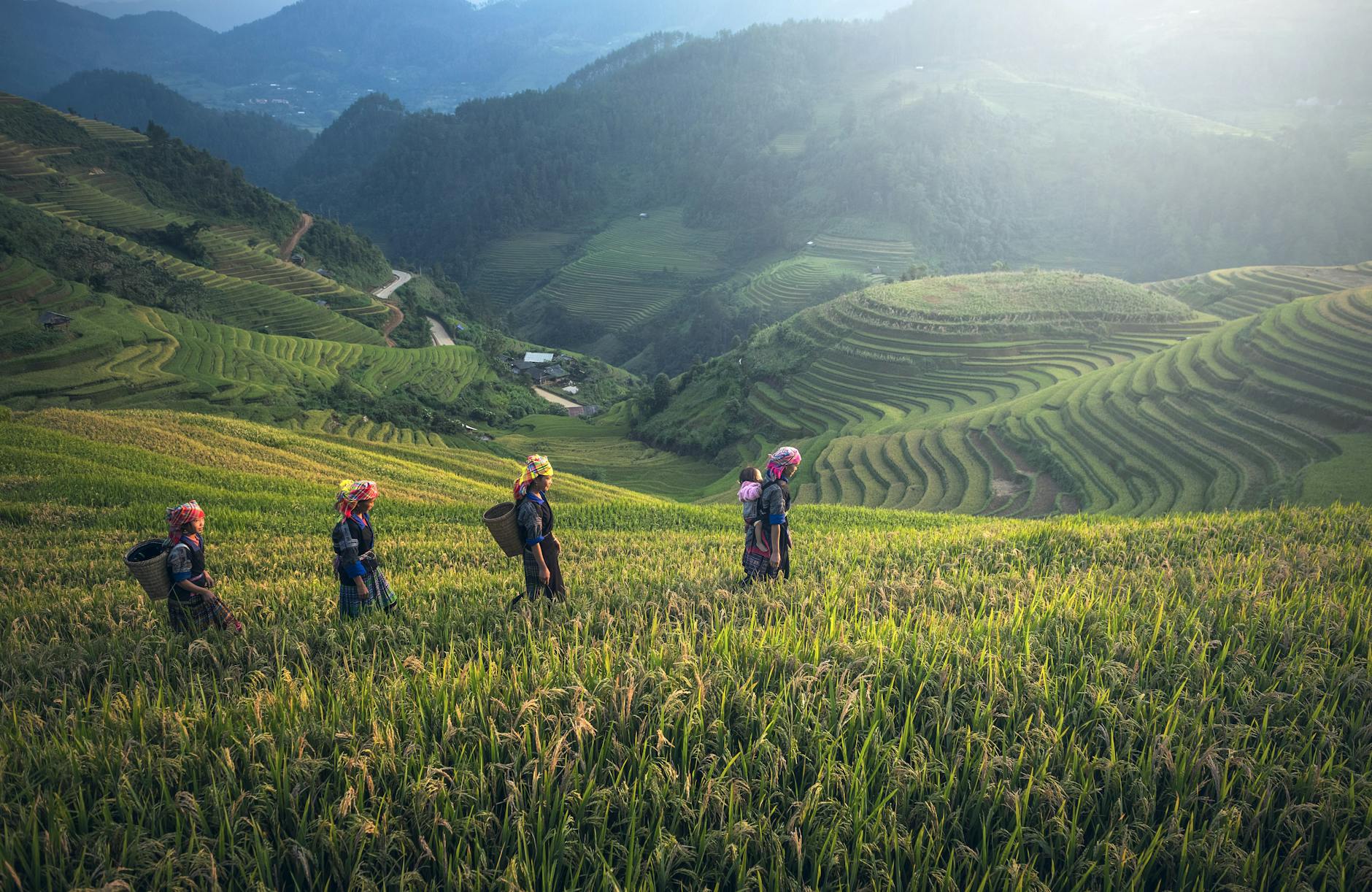
Day trips radiate easily from the capital: Ha Long Bay is a four-hour drive east, the rice-terrace highlands of Sapa are an overnight train or five-hour drive north, and the ancient capital of Hoa Lu with the karst scenery of Trang An is two hours south. Hanoi's Noi Bai Airport (HAN) handles international and domestic flights, with the city centre roughly 45 minutes away by taxi or express bus.