November to February (cool and dry season)
$25-150 USD
Burmese (English in tourist areas and hotels)
Myanmar Kyat (MMK)
Overview
About Yangon
Yangon, Myanmar's largest city and former capital, sprawls across the Yangon River delta in the country's south, a place where gilded stupas pierce a tropical skyline still dominated by colonial-era facades. The city holds the largest collection of colonial-period buildings in Southeast Asia — more than any other city on the continent — a legacy of its years as the capital of British Burma from 1852 to 1948. Streets laid out in a tight grid by British engineers after 1852 are lined with crumbling Italianate mansions, Edwardian commercial blocks, and the monumental red-brick Secretariat (Ministers' Building), where independence hero General Aung San and eight cabinet members were assassinated in July 1947. Parts of the Secretariat reopened as a heritage museum and cultural space, making one of Myanmar's most hallowed sites accessible to visitors for the first time in decades.
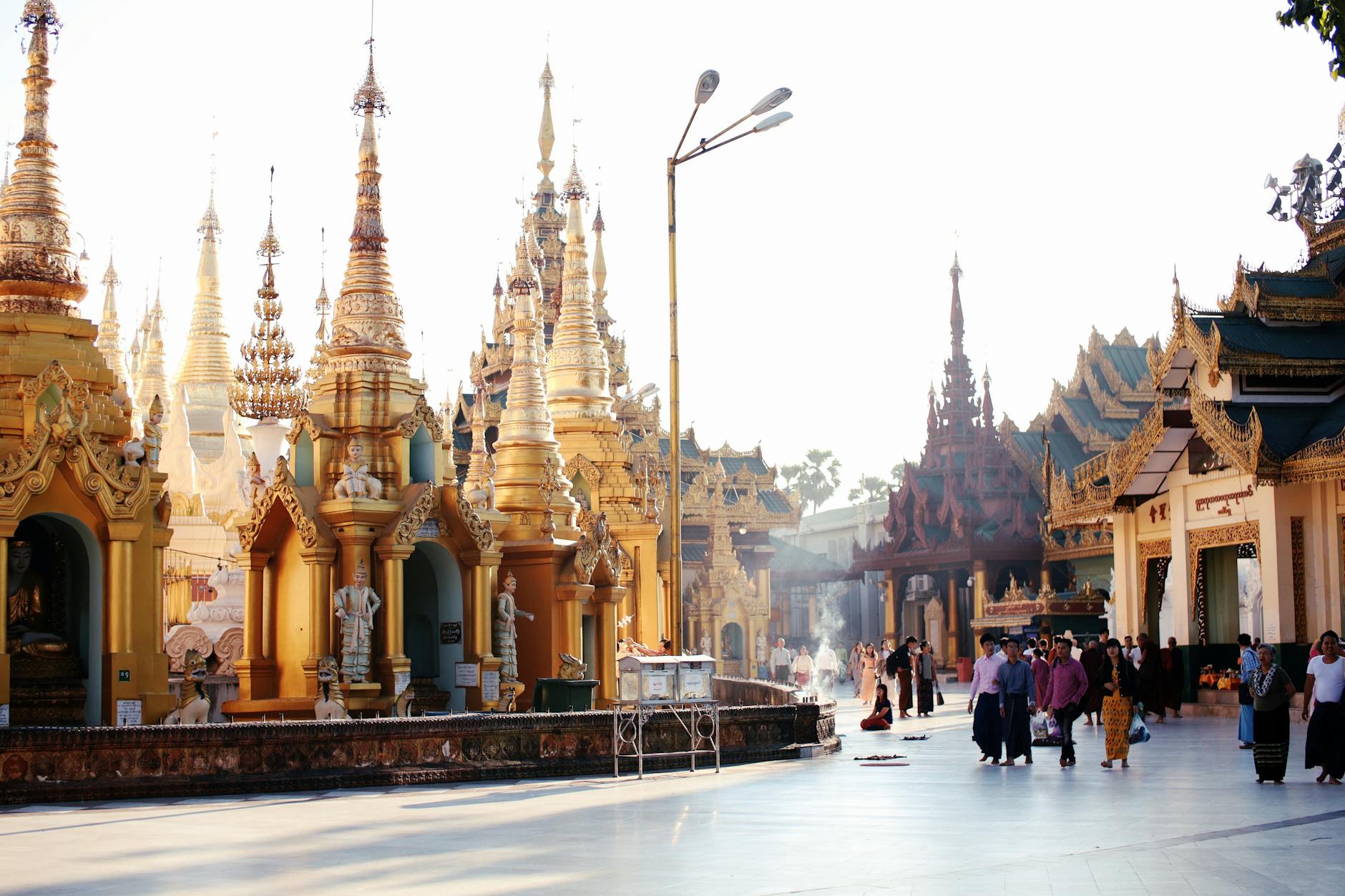
Yangon's spiritual anchor is the Shwedagon Pagoda, a 99-metre gilded stupa believed to enshrine relics of four Buddhas, its tip crowned with 5,448 diamonds and 2,317 rubies. Sunset at the pagoda platform — watching the gold surface shift from warm amber to blazing white under floodlights — remains the single most memorable experience the city offers. Across town, the Chaukhtatgyi Pagoda shelters a 66-metre reclining Buddha, one of the world's largest; directly behind it, the lesser-known Ngahtatgyi Pagoda houses a towering seated Buddha that most visitors overlook entirely, despite the two temples being separated by only a narrow lane.
Daily life reveals itself most vividly aboard the Circular Railway, a 46-kilometre loop completed in 1954 that carries roughly 150,000 passengers a day through suburban markets, rice paddies, and residential neighbourhoods on a three-hour circuit. Downtown, 19th Street in Chinatown transforms each evening into an open-air beer station where rows of plastic chairs and charcoal grills serve draught Myanmar Beer alongside skewered offal and grilled seafood — a tradition Anthony Bourdain helped popularise. In the teashops that occupy almost every block, the local custom of ordering 'copy tea' — a blend of tea, condensed milk, and instant coffee — is a uniquely Burmese ritual.
The Yangon Heritage Trust, founded by historian Thant Myint-U, runs guided walking tours through forgotten downtown neighbourhoods, passing the Armenian Church of St John the Baptist (1862), the Musmeah Yeshua Synagogue, and residential blocks that illustrate the cosmopolitan mix of Yangon's past.
The climate divides into a hot dry season (March to May), a wet monsoon (June to October), and a cool dry season (November to February) that offers the most comfortable sightseeing weather. Yangon International Airport (RGN) handles international flights from Bangkok, Singapore, and Kuala Lumpur. Average daily budgets range from under $25 for hostel travellers to $150 or more at the luxury heritage hotels along Strand Road.
Accommodation
Where to Stay in Yangon


Experiences
Things to Do in Yangon
Shwedagon Pagoda Sunset Visit
Visit Myanmar's most sacred Buddhist site, the 99-metre gilded Shwedagon Pagoda, timed for sunset when the gold surface transitions from warm amber to blazing white under floodlights. The stupa's tip is crowned with 5,448 diamonds and 2,317 rubies. Allow at least two hours to walk the marble platform and explore the surrounding shrines.
Yangon Circular Railway Loop
Board the 46-kilometre commuter loop at Yangon Central Railway Station for a three-hour circuit through suburban markets, rice paddies, and residential neighbourhoods. Tickets cost just 200 MMK and you can hop off at any station to explore. The route passes through Insein — home to colonial-era railway workshops — and several lively local markets where vendors board the train to sell produce.
Yangon Heritage Trust Downtown Walking Tour
Join a guided walking tour organized by the Yangon Heritage Trust through the colonial downtown quarter, passing the Armenian Church of St John the Baptist, the Secretariat building, the High Court, Pansodan Street galleries, and dozens of crumbling Edwardian commercial blocks. Tours run on Wednesdays, Saturdays, and Sundays and reveal the diverse cultural layers of the city's past.
Chaukhtatgyi and Ngahtatgyi Pagoda Visit
See two of Yangon's most impressive Buddha images separated by a single narrow lane: the Chaukhtatgyi Pagoda's 66-metre reclining Buddha — one of the world's largest — with 108 auspicious symbols on its feet, and the often-overlooked Ngahtatgyi Pagoda housing a towering seated Buddha in royal regalia. Entry to both is free.
19th Street Chinatown Food and Beer Tour
Explore Yangon's most vibrant evening food scene on 19th Street in Chinatown, where rows of plastic chairs and charcoal grills serve draught Myanmar Beer alongside skewered offal, grilled seafood, and Shan noodles. This is the street Anthony Bourdain made famous. Self-guided or with a local food tour operator.
The Secretariat (Ministers' Building) Tour
Tour the monumental red-brick Secretariat, built between 1889 and 1905 as the administrative centre of British Burma, where General Aung San and eight cabinet members were assassinated in July 1947. Parts of the complex have been restored and reopened as a heritage museum and cultural space, with guided tours explaining its architectural and political significance.
Bogyoke Aung San Market (Scott Market) Shopping
Browse over 2,000 stalls in this colonial-era covered market selling gemstones (Myanmar is famous for rubies and jade), lacquerware, handwoven textiles, Shan bags, and antiques. The market occupies a 1926 building and is the best single destination for souvenir shopping in Yangon. Closed on Mondays and public holidays.
Kandawgyi Lake Sunset Stroll
Walk around Kandawgyi Lake, an artificial lake in the heart of Yangon, for sunset views of the Shwedagon Pagoda reflected in the water alongside the gilded Karaweik Palace barge (a replica of a Burmese royal barge). The surrounding Kandawgyi Nature Park offers shaded boardwalks through tropical gardens. Entry to the park area requires a small fee for foreign visitors.
Practical Info
Yangon Travel Tips
Airport
RGN
Timezone
UTC+6:30
Currency
Myanmar Kyat (MMK)
Population
5.7 million
Information
Frequently Asked Questions
What is the best time to visit Yangon?
Do I need a visa to visit Myanmar?
How do I get from Yangon International Airport to the city centre?
Is Yangon safe for tourists?
What is the Yangon Circular Railway and how do I ride it?
What are the must-try foods in Yangon?
How do I get around Yangon?
What day trips are possible from Yangon?
Ready to explore Yangon?
View all hotels, activities, and detailed information on our full Yangon destination page.
Explore Yangon