Cambodia Budget Travel Guide 2026 — How Much Does Cambodia Cost Per Day?
Cambodia is one of the cheapest countries in Southeast Asia — and honestly, one of the best-value travel destinations on the planet. Where else can you explore ancient temple complexes that rival anything in the world, eat incredible food for under $2 a meal, and crash in a decent guesthouse for $5 a night? All while using US dollars as the local currency.
Whether you're a shoestring backpacker trying to stretch $15 a day or a comfort-conscious traveler happy to spend $70, Cambodia has you covered. This Cambodia budget travel guide breaks down exactly what things cost in 2026, with real prices, honest hostel and hotel picks, and the money-saving tips that actually make a difference.
Let's get into it.
Cambodia Daily Budget Breakdown
Here's what a realistic day costs at three different budget levels:
Backpacker Budget: $15–25/Day
| Category | Daily Cost | What You Get |
|---|---|---|
| Accommodation | $3–8 | Dorm bed in a social hostel |
| Food | $4–7 | Street food + local restaurants (3 meals) |
| Transport | $2–5 | Tuk-tuk short rides or motodop |
| Activities | $3–8 | Temple visits, museums, night markets |
| Drinks | $1–2 | Angkor Beer at local spots |
| Total | $15–25 | Full, rewarding day |
Real backpacker scenario in Siem Reap: Dorm at Mad Monkey Hostel ($6), breakfast at a street stall ($1), Angkor Wat 1-day pass ($37 — the big splurge spread over multiple days), lunch at a local Khmer restaurant ($2), tuk-tuk to temples ($3), dinner at the night market ($2), Angkor Beer ($1). $15/day excluding the Angkor pass.
Mid-Budget: $40–60/Day
| Category | Daily Cost | What You Get |
|---|---|---|
| Accommodation | $15–25 | Private room in a boutique guesthouse or 3-star hotel |
| Food | $12–18 | Mix of street food + sit-down restaurants |
| Transport | $5–10 | Private tuk-tuk or occasional taxi |
| Activities | $8–15 | Guided tours, paid attractions |
| Drinks | $3–5 | Cocktails, craft beer, nicer bars |
| Total | $40–60 | Very comfortable experience |
Real mid-budget scenario in Phnom Penh: Private room at Onederz Hostel ($18), breakfast at a café ($4), Royal Palace + National Museum ($12), lunch at a riverside restaurant ($6), afternoon tuk-tuk tour ($5), dinner at a nice Khmer restaurant ($8), a few drinks ($5). $53/day.
Comfortable: $70–100/Day
| Category | Daily Cost | What You Get |
|---|---|---|
| Accommodation | $40–60 | Nice 4-star hotel with pool |
| Food | $20–30 | Restaurants, international cuisine |
| Transport | $10–20 | Private driver, occasional flights |
| Activities | $10–20 | Premium tours, multi-day trips |
| Drinks | $5–10 | Hotel bar, rooftop cocktails |
| Total | $70–100 | Very comfortable, no compromises |
Accommodation on a Budget
Best Hostels ($3–8/night)
Cambodia's hostel scene has come a long way. Here are the standout chains and spots:
- Mad Monkey Hostels (Siem Reap & Phnom Penh) — The biggest hostel brand in Cambodia. Social atmosphere, pool parties, pub crawls, free breakfast. Dorms from $5–8. If you want to meet other travelers, this is the place. Book on Booking.com
- Onederz Hostel (Siem Reap & Phnom Penh) — Sleek, modern, and spotlessly clean. Think boutique hotel aesthetics at hostel prices. Great WiFi, comfortable pods. Dorms from $5–7. Book on Booking.com
- Me Mate's Place (Siem Reap) — Small, friendly, and consistently well-reviewed. Good common area, free breakfast, walking distance to Pub Street. Dorms from $4. Book on Booking.com
- Top Banana (Siem Reap) — Budget legend. Basic but social. Great for one or two nights. Dorms from $3.
- Blues Guesthouse (Kampot) — Riverside hostel with a laid-back vibe, hammocks, and a great restaurant. Dorms from $4.
Budget Hotels & Guesthouses ($8–20/night)
If you want a private room without paying hotel prices:
- Siem Reap: Pavillon d'Orient Boutique Hotel ($25–40, worth the splurge), Naraya Guesthouse ($12–18), Garden Village Guesthouse ($10–15, pool and garden setting)
- Phnom Penh: The White Boutique Hotel ($20–30), Ohana Hotel ($12–18), Mad Monkey Private Rooms ($15–22)
- Kampot: Kampot Riverside Hotel ($15–22), The Columns Boutique Hotel ($25–35)
Booking tip: Agoda is often the cheapest booking platform for Cambodia — sometimes 10–20% less than Booking.com for the same property. Always compare both. Book ahead for peak season (November–March), but during low season (June–October) you can often just show up and negotiate.
Food on a Budget
Cambodian food is underrated, underpriced, and absolutely delicious. Eating well on a budget here is effortless.
Street Food: Best Dishes Under $2
- Fish Amok — Cambodia's national dish. Curried fish steamed in banana leaves with coconut milk and lemongrass. Street versions: $1–2. Restaurant versions: $3–5.
- Bai Sach Chrouk — Grilled pork over broken rice with pickled vegetables and a fried egg. The ultimate Cambodian breakfast. $1–1.50.
- Nom Banh Chok — Khmer noodles with a green fish-based curry. Served by women carrying pots on their shoulders in the early morning. $0.75–1.
- Fried Rice (Nasi Goreng-style) — The backpacker staple. $1–1.50.
- Lort Cha — Stir-fried short fat noodles with egg, vegetables, and chili. $1–1.50.
- Kuy Teav — Pork or beef noodle soup for breakfast. $0.75–1.50.
Local Restaurants ($2–4 for a Full Meal)
Look for places with plastic chairs, Khmer-language menus, and lots of local customers. You'll get a generous plate of rice with a main dish for $2–3. In Phnom Penh, the area around Orussey Market has excellent cheap eateries. In Siem Reap, walk a few blocks away from Pub Street for real prices.
Night Market Eating
Siem Reap's Night Market and Phnom Penh's Riverside Night Market are goldmines for budget eating. Skewers for $0.50, fresh spring rolls for $1, full plates for $2–3. Go after 5pm when everything is fresh and sizzling.
Drinks
- Angkor Beer — The national brew. $0.75–1 per glass at local spots, $1.50–3 at bars on Pub Street.
- Cambodia Beer — Slightly lighter alternative. Similar prices.
- Fresh fruit shakes — $1–1.50 at street stalls. Mango, pineapple, and watermelon are the best.
- Local coffee — Strong, sweet iced coffee with condensed milk. $0.50–1.
What to avoid: Tourist restaurants right near Angkor Wat and along Siem Reap's Pub Street charge 2–3x local prices. Walk 5–10 minutes away for the same quality at half the cost.
Transport on a Budget
Getting Between Cities
Cambodia's intercity transport is cheap and (mostly) reliable:
| Route | Bus (Best Option) | Shared Taxi | Private Taxi |
|---|---|---|---|
| Siem Reap → Phnom Penh | $10–15 (6 hrs) | $8–10 (5 hrs) | $50–70 (4.5 hrs) |
| Phnom Penh → Sihanoukville | $8–12 (5 hrs) | $7–10 (4 hrs) | $40–55 (4 hrs) |
| Phnom Penh → Kampot | $5–8 (3.5 hrs) | $5–7 (3 hrs) | $30–40 (2.5 hrs) |
| Siem Reap → Battambang | $7–10 (4 hrs) | $6–8 (3 hrs) | $35–50 (3 hrs) |
| Kampot → Kep | $2–3 (30 min) | $2 (25 min) | $10–15 (25 min) |
| Siem Reap → Battambang (boat) | $20–25 (6–8 hrs) | — | — |
Best bus companies: Giant Ibis (most comfortable, WiFi, AC, snacks — $10–15), Mekong Express ($8–12), and Capitol VIP ($7–10). Book in advance during peak season through 12Go.asia.
Boat from Siem Reap to Battambang: Scenic but slow (6–8 hours, $20–25). Only worth it if you want the journey itself — the floating villages and river life are fascinating.
Getting Around Cities
- Tuk-tuk: $1–3 for short rides within cities. Always agree on the price before getting in, or use the PassApp app (Cambodia's answer to Grab).
- Motodop (motorcycle taxi): $0.75–1.50 for short rides. Cheaper than tuk-tuks but less comfortable with luggage.
- Grab / PassApp: Both operate in Phnom Penh and Siem Reap. Fares are fair and you avoid the negotiation hassle. Download both — PassApp often has more tuk-tuks available.
- Walking: Most tourist areas are compact enough to explore on foot. Phnom Penh's riverside, Siem Reap's old town, and Kampot's riverfront are all very walkable.
Pro tip: For the Angkor Wat temple circuit, share a tuk-tuk with 2–3 other travelers. A full day costs $15–20 total, split between everyone it's just $4–7 per person.
Do You Need Domestic Flights?
No. Cambodia is compact enough that buses handle every route efficiently. The only exception might be Phnom Penh to Siem Reap if you're very short on time, but even then the bus is fine. Save your money.
Activities & Attractions on a Budget
The Big One: Angkor Wat
- 1-day pass: $37
- 3-day pass: $62 (valid for 10 days)
- 7-day pass: $72 (valid for 1 month)
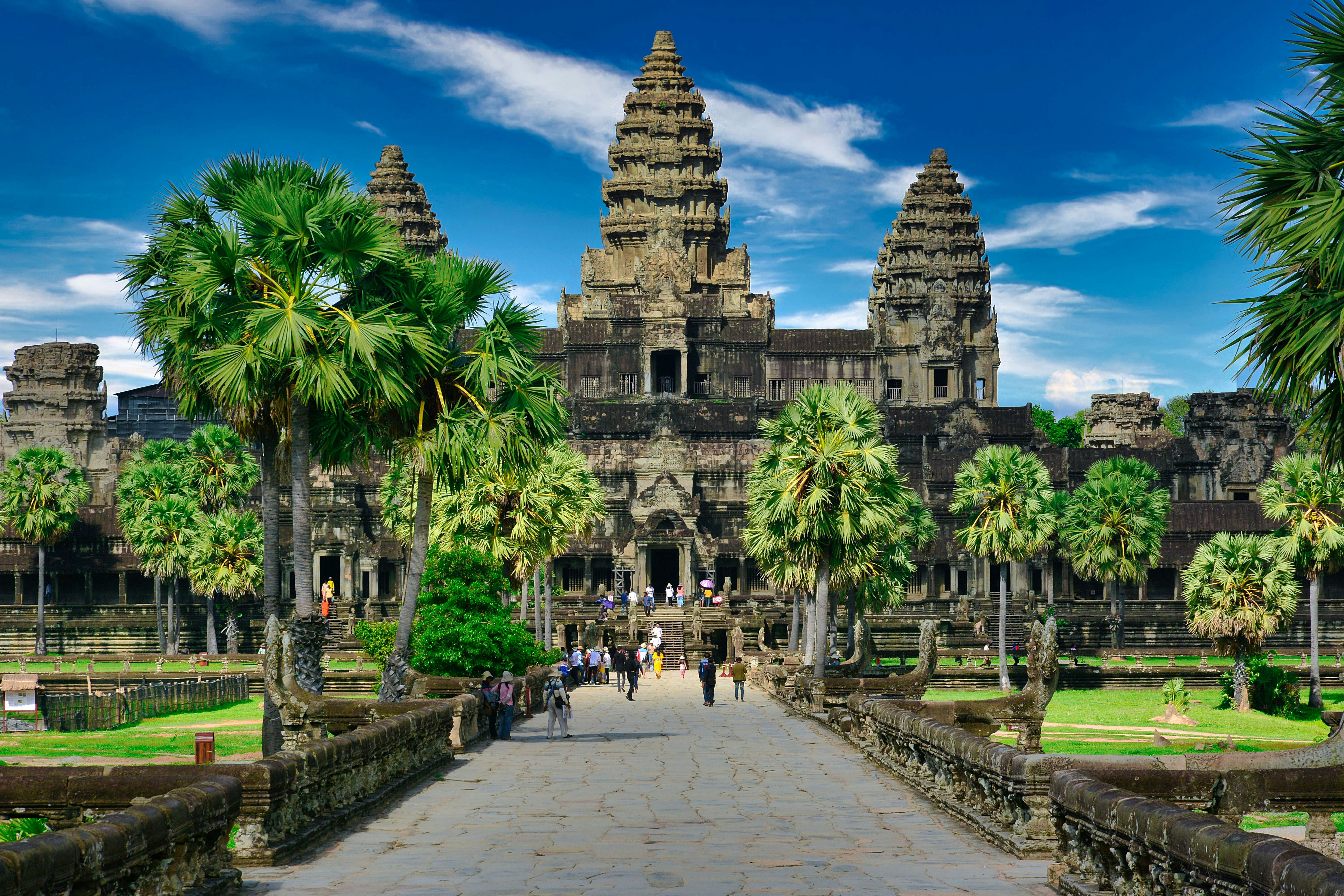
Yes, $37 stings on a $15/day budget. But it's Angkor Wat — the largest religious monument on Earth. If you're doing a 3-day pass ($62), that's roughly $20/day of sightseeing, which is reasonable. Check out our full Siem Reap & Angkor Wat guide for temple-hopping strategies.
Free & Dirt-Cheap Activities
| Activity | Cost | Where |
|---|---|---|
| Wat Phnom | $1 | Phnom Penh |
| Royal Palace | $10 | Phnom Penh (worth it) |
| Killing Fields (Choeung Ek) | $3 | Phnom Penh (15km outside city) |
| S-21 Prison (Tuol Sleng) | $5 | Phnom Penh (important — book together with Killing Fields) |
| Phnom Penh Riverside walk | Free | Phnom Penh |
| Night markets | Free to browse | Siem Reap, Phnom Penh, Kampot |
| Beaches | Free | Sihanoukville, Koh Rong, Kep |
| Kep Crab Market | Free (eating extra) | Kep |
| Kampot pepper farm tours | $2–5 | Kampot |
| Bamboo Train | $5 | Battambang |
Budget Tours via Klook
Book tours and activities through Klook or Viator for discounts:
- Phnom Penh city tour: $15–25
- Angkor Wat sunrise tour with guide: $20–35
- Killing Fields + S-21 combo tour: $15–20
- Koh Rong island-hopping day trip: $20–30
- Kampot countryside tour (pepper farms, salt fields, caves): $15–25
Best Budget Destinations in Cambodia
Siem Reap — $18–25/Day
The tourist hub of Cambodia, built around Angkor Wat. Excellent hostel scene, cheap food, and enough to keep you busy for 3–5 days. The temple complexes alone justify the trip. Walk 10 minutes off Pub Street and prices drop immediately. Read our complete Siem Reap guide.
Phnom Penh — $15–22/Day
Probably the cheapest capital city in Southeast Asia. Fascinating history (Killing Fields, S-21), a beautiful riverside promenade, great street food, and a growing café culture. Stay in the Riverside or BKK1 area for the best budget options.
Kampot — $12–18/Day
The darling of Cambodia's backpacker scene. A sleepy riverside town with French colonial architecture, famous Kampot pepper farms, Bokor Hill Station, and some of the best sunsets in the country. Food is incredibly cheap here. This is where many budget travelers end up staying longer than planned.
Kep — $15–20/Day
Kampot's quieter neighbor, known for its crab market (Kep crab with Kampot pepper is a must-try), relaxed beaches, and lush national park. Perfect for a 1–2 day trip from Kampot. Budget guesthouses start at $5.
Sihanoukville — $20–30/Day
The gateway to Cambodia's islands. The town itself has become heavily developed (read: not the charming beach town it once was), but it's the jump-off point for the real prizes. Only stay here long enough to catch a ferry.
Koh Rong & Koh Rong Samloem — $15–25/Day
The reason you put up with Sihanoukville. Koh Rong is the party island (bioluminescent plankton at night!), Koh Rong Samloem is the peaceful one (crystal-clear water, pristine beaches). Basic beachside bungalows from $5–15. Ferries from Sihanoukville: $20–25 round trip.
Battambang — $15–20/Day
Cambodia's second-largest city has a relaxed, artsy vibe. Highlights include the famous bamboo train ($5), well-preserved French colonial architecture, and some excellent food. A boat ride from Siem Reap ($20–25) is the most scenic way to arrive.
Sample Budgets by Trip Length
| Duration | Backpacker ($15–25/day) | Mid-Budget ($40–60/day) | Comfortable ($70–100/day) |
|---|---|---|---|
| 1 week | $105–175 + Angkor pass ($37) = $140–210 | $280–420 + Angkor pass = $320–460 | $490–700 + Angkor pass = $530–740 |
| 2 weeks | $210–350 + Angkor pass = $245–390 | $560–840 + Angkor pass = $600–880 | $980–1,400 + Angkor pass = $1,020–1,440 |
| 1 month | $450–750 + Angkor pass = $490–790 | $1,200–1,800 + Angkor pass = $1,240–1,840 | $2,100–3,000 + Angkor pass = $2,140–3,040 |
Realistic 2-week backpacker scenario: Fly into Siem Reap (4 days, Angkor temples), bus to Phnom Penh (3 days, history + food), bus to Kampot (4 days, chill + explore), bus to Kep (1 day), bus back to Phnom Penh and fly out. Total transport: ~$50. Total accommodation: ~$80. Total food + activities: ~$180. Grand total: ~$350–400 including the Angkor pass. That's an incredible two weeks.
Money-Saving Tips That Actually Work
1. Eat Where Locals Eat, Not Where Tourists Eat
This is the single biggest money-saver in Cambodia. A meal at a tourist-facing restaurant near Pub Street: $5–8. The same quality Khmer food at a local spot two blocks away: $1.50–2.50. Look for plastic chairs, Khmer script on the menu, and a crowd of Cambodian diners.
2. Always Agree on Tuk-Tuk Prices Before Getting In
Or better yet, use PassApp or Grab for transparent pricing. If you do negotiate, a short ride in town should be $1–2, never more than $3. For the Angkor temple circuit, a full day should be $15–20 for the tuk-tuk (split between passengers).
3. Travel During Low Season (June–October)
Hotel and guesthouse prices drop 30–50% during the rainy season. Yes, you'll get wet — but rain in Cambodia usually comes in heavy afternoon downpours, not all-day drizzle. Mornings are often sunny and clear. Plus, fewer crowds at the temples.
4. Share Transport With Other Travelers
This is huge for Angkor Wat. A private tuk-tuk for the day is $15–20. Split between 4 people, that's $4–5 each. Same for buses and taxis between cities — many hostels have notice boards where travelers organize shared rides.
5. Drink Local Beer
Angkor Beer and Cambodia Beer are $0.75–1 per glass at local spots. Imported beers (Heineken, Tiger) are $2–3. Stick to the local stuff — it's perfectly fine.
6. Use US Dollars
Cambodia runs on USD. You don't need to exchange currency — bring crisp, clean US bills (torn or very worn bills are often refused). You'll receive change in Cambodian riel (4,100 riel = $1). Carry small bills ($1, $5) for street food and tuk-tuks.
7. Stay in Guesthouses, Not Hotels
A $10 guesthouse in Cambodia is often just as clean and comfortable as a $30 hotel. The difference is usually just a pool and a reception desk. Guesthouses also tend to have more character and friendlier owners who can give you local tips.
8. Book Buses on 12Go.asia
12Go.asia aggregates all bus companies in Cambodia and lets you compare prices and schedules. Sometimes you'll find deals not available at the bus station. Book Giant Ibis through them — it's the most reliable option.
Is Cambodia Still Cheap in 2026?
Short answer: Yes, absolutely.
Cambodia remains one of the cheapest countries in Southeast Asia — cheaper than Thailand, cheaper than Vietnam, and dramatically cheaper than Malaysia or Singapore. While prices in Siem Reap and Phnom Penh have crept up slightly in tourist areas, you can still eat a full meal for $1.50, sleep in a clean dorm for $4, and get across the country by bus for $10.
The key is knowing where to spend and where to save. Angkor Wat ($37) is the big-ticket item — but it's also one of the world's great sights, and you can spread a 3-day pass ($62) across multiple days to bring the daily cost down. Everything else — food, accommodation, transport — is genuinely cheap.
| Country | Budget Daily Cost | Mid-Range Daily Cost |
|---|---|---|
| Cambodia | $15–25 | $40–60 |
| Vietnam | $18–30 | $45–80 |
| Thailand | $20–35 | $50–100 |
| Laos | $15–25 | $35–55 |
| Philippines | $20–35 | $50–90 |
| Indonesia (Bali) | $25–40 | $60–120 |
| Malaysia | $20–35 | $50–90 |
Cambodia is right there with Laos as the cheapest destination in the region, and it offers significantly more in terms of world-class attractions (Angkor Wat alone puts it on the map). If budget is your priority, Cambodia should be near the top of your Southeast Asia itinerary.
Frequently Asked Questions
Is Cambodia safe for budget travelers? Yes. Cambodia is generally safe for tourists. The main risks are traffic (be careful on roads) and petty theft (keep valuables secure). Violent crime against tourists is rare.
Do I need a visa? Most nationalities can get a visa on arrival at the airport or major land borders for $30 (tourist, 30 days). E-visa is available online for $36. Apply here.
Is $1,000 enough for a month in Cambodia? More than enough. A backpacker can do a month for $450–500 including the Angkor pass. Even at a comfortable mid-range pace, you'd spend $1,200–1,800.
Should I go to Sihanoukville? Only as a transit point to the islands. The town itself has been heavily overdeveloped. Koh Rong and Koh Rong Samloem are the real destinations.
Want more Cambodia and Southeast Asia content? Check out our related guides:
- Siem Reap Travel Guide 2026
- Phnom Penh Travel Guide
- Thailand Budget Travel Guide
- Bali on a Budget – Complete Guide
- 5 Days in Vietnam – The Perfect Route
- Laos Budget Travel Guide
- Southeast Asia 1-Month Itinerary
Last updated: April 2026
Explore the Destination
Cambodia Travel Guide
Hotels, activities, and travel tips for Cambodia
You Might Also Like