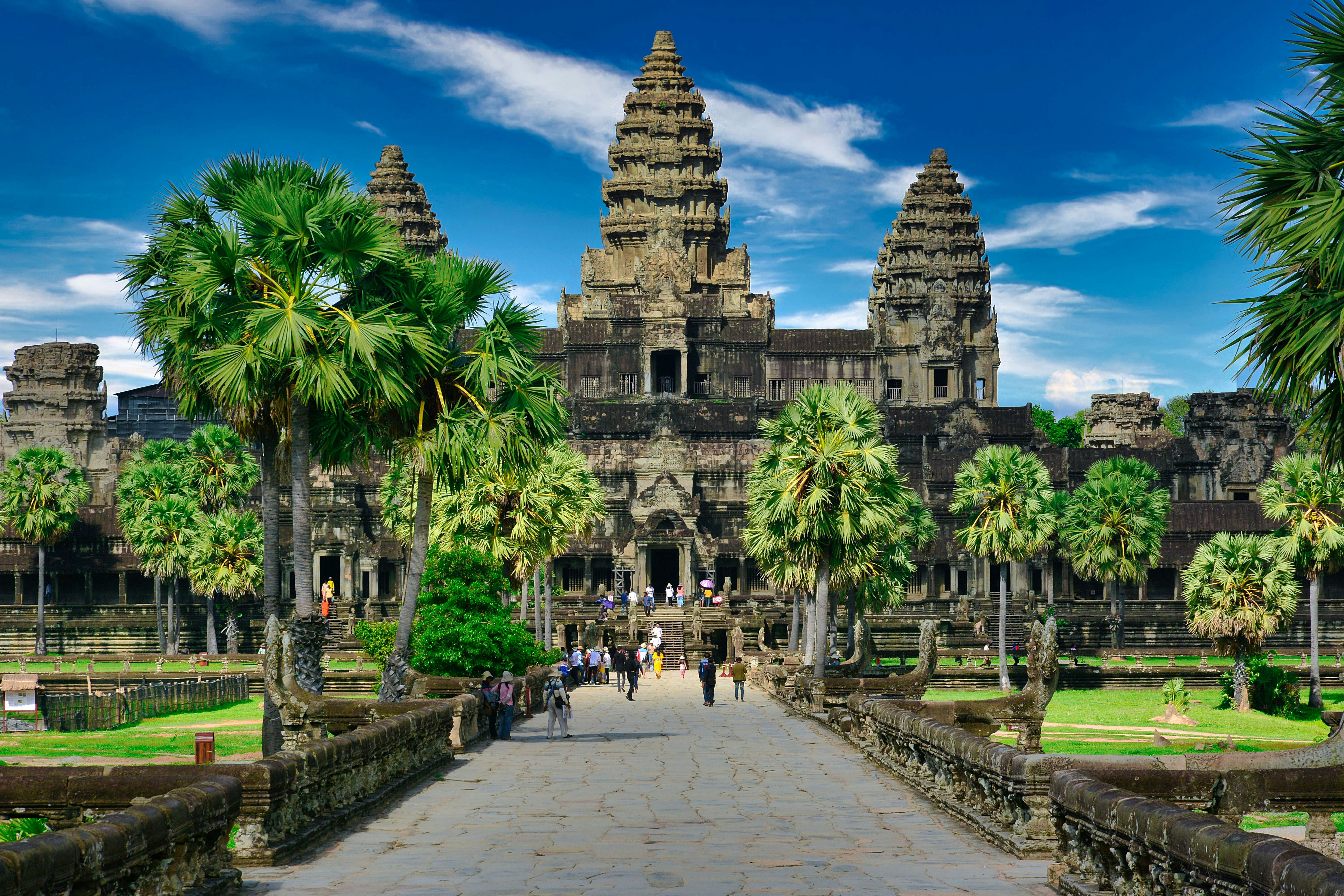
Royal Palace and Mekong riverfront in Phnom Penh, Cambodia
Travel GuideApril 4, 202629 min read

Phnom Penh Travel Guide 2026 - Things to Do, Where to Stay & Budget Tips

Complete Phnom Penh travel guide 2026 - top things to do, Royal Palace, Killing Fields, best hotels, food guide, budget tips & how to get around. Plan your Phnom Penh trip.

Waddat Editorial

Editorial Team

Phnom Penh Travel Guide 2026 — Things to Do, Where to Stay & Budget Tips

Phnom Penh doesn't get the love it deserves. While most travelers breeze through Cambodia's capital on their way to Angkor Wat or the southern islands, those who actually spend a few days here discover one of Southeast Asia's most fascinating cities. It's a place where golden palaces sit minutes from sobering genocide memorials, where French colonial architecture frames chaotic street food scenes, and where your money goes further than almost anywhere else on earth.

This Phnom Penh travel guide 2026 covers everything you need to know: the top things to do (including the Royal Palace, Tuol Sleng, and the Killing Fields), where to stay on any budget, how to get around, what to eat, and how to experience this remarkable city like a traveler — not just a tourist passing through. We've included real 2026 prices, honest hotel picks, and practical tips from multiple trips to the region.

Table of Contents

  1. Why Visit Phnom Penh
  2. Best Time to Visit Phnom Penh
  3. How to Get to Phnom Penh
  4. Where to Stay in Phnom Penh
  5. Top Things to Do in Phnom Penh
  6. Food & Culture Guide
  7. Sample Phnom Penh Itineraries
  8. How to Get Around Phnom Penh
  9. Phnom Penh Budget Guide
  10. Safety Tips
  11. Frequently Asked Questions

Why Visit Phnom Penh

Phnom Penh is a city that rewards the curious. It's not as polished as Singapore or as immediately photogenic as Luang Prabang, but it has a raw energy and depth that few places in Southeast Asia can match.

Here's what makes Phnom Penh special:

  • The Royal Palace & Silver Pagoda — A stunning complex of golden-roofed pavilions that serves as the official residence of Cambodia's king. The Silver Pagoda alone — with its floor of 5,000 solid silver tiles and a 90kg gold Buddha studded with 9,584 diamonds — is worth the trip.
  • Deeply important history — The Tuol Sleng Genocide Museum (S-21) and Choeung Ek Killing Fields are essential, sobering visits that help you understand Cambodia's recent past under the Khmer Rouge. These aren't easy experiences, but they're profoundly important ones.
  • Riverside living — The Sisowath Quay promenade along the Tonle Sap and Mekong rivers is one of the most pleasant walks in Southeast Asia. Come for sunset, stay for the street food.
  • Incredible food for almost nothing — Fish amok, beef lok lak, noodle soup for breakfast, and riverside dinners that cost a fraction of what you'd pay in Bangkok or Ho Chi Minh City.
  • It's ridiculously affordable — Phnom Penh is probably the cheapest capital city in Southeast Asia. Comfortable hotels under $25, full meals under $3, and beer for $1.
  • A growing café and bar scene — From the neon-lit speakeasies of Bassac Lane to the weekend Walk Street on the riverside, Phnom Penh has a surprisingly vibrant social scene.

Most travelers spend 2–3 days here, which is enough to cover the major sights, eat your way through the markets, and get a feel for the city. If you're doing a Cambodia trip, Phnom Penh pairs perfectly with Siem Reap & Angkor Wat — the two cities are connected by a scenic 6-hour bus ride.

Best Time to Visit Phnom Penh

Cambodia has a tropical climate with two main seasons. Phnom Penh, being inland, gets hot — plan accordingly.

November to February — Cool & Dry (Best Overall) 🌤️

  • Temperature: 24–32°C (75–90°F)
  • Pros: Low humidity, minimal rain, comfortable for walking around the city and palace grounds
  • Cons: Peak tourist season, hotel prices at their highest
  • November bonus: The Bon Om Touk (Water Festival) in November is Cambodia's biggest celebration — boat races on the Tonle Sap, fireworks, and street parties. One of the best times to experience local culture.

This is the classic best time to visit Phnom Penh. Mornings and evenings are pleasantly cool, and you won't have to plan your day around afternoon thunderstorms.

March to May — Hot Season ☀️

  • Temperature: 33–40°C (91–104°F)
  • Pros: Fewer tourists, cheaper hotels
  • Cons: Brutally hot — midday sightseeing is exhausting. April is the hottest month.
  • Tip: Do your sightseeing early (7–10am), rest during the hottest part of the day in a café or your hotel pool, then head out again from 4pm.

June to October — Rainy Season 🌧️

  • Temperature: 27–33°C (81–91°F)
  • Pros: Lush green scenery, cheapest hotels, dramatic skies, fewest tourists
  • Cons: Heavy afternoon downpours (usually 2–5pm), high humidity, occasional flooding in low-lying areas
  • Tip: Rain rarely lasts all day. Mornings are often sunny and clear — get your outdoor sightseeing done early.

Our recommendation: November through January for first-timers who want the best weather. If you're budget-conscious, September through October offers the lowest prices and still-pleasant mornings.

How to Get to Phnom Penh

By Air

Phnom Penh International Airport (PNH) is 10 km west of the city center:

From Flight Time Typical Cost
Bangkok (BKK/DMK) 1 hour $50–100
Ho Chi Minh City (SGN) 45 minutes $50–90
Siem Reap (REP) 45 minutes $60–100
Singapore (SIN) 2 hours $80–160
Kuala Lumpur (KUL) 2 hours $60–120
Hanoi (HAN) 2 hours $70–130

Airlines servicing PNH include Cambodia Angkor Air, AirAsia, VietJet, SilkAir, and LAN Airlines.

Getting from the airport to the city: A Grab car costs $9–15 and takes about 30 minutes. A tuk-tuk via Grab is $7–12. There's also a dedicated Grab waiting area outside arrivals — look for the big green sign across the parking area. Some hotels offer free airport pickup if you book directly.

By Bus from Ho Chi Minh City

  • Duration: 6–7 hours (including border crossing)
  • Cost: $12–18
  • Companies: Giant Ibis ($15–18, most reliable with AC and Wi-Fi), Mekong Express ($12–15)
  • Border: Bavet/Moc Bai crossing — the process is straightforward. Have your e-visa ready.
  • Book through: 12Go.asia for the best selection and guaranteed seats

By Bus from Siem Reap

  • Duration: 6–7 hours
  • Cost: $10–15
  • Companies: Giant Ibis ($15, most comfortable), Mekong Express ($10–12), Capitol VIP ($8–10)
  • Scenery: The route passes through rural Cambodian countryside — surprisingly scenic
  • Book through: 12Go.asia

By Bus from Bangkok

  • Duration: 8–10 hours (including border crossing at Poipet)
  • Cost: $20–30
  • Warning: The Poipet border is notorious for scams. Process your Cambodia visa yourself at the official window ($30). Do NOT pay anyone who offers to "help" with your visa for extra money.

By Boat from Siem Reap

  • Duration: 5–6 hours
  • Cost: $25–35
  • Season: Only available during the wet season (June–November) when water levels are high enough
  • Worth it?: The scenery along the Tonle Sap is beautiful, but the bus is faster and cheaper. Choose the boat if you want the journey itself to be part of the experience.

Private Taxi

  • From Siem Reap: 5–6 hours, $50–70
  • From Ho Chi Minh City: 5–6 hours, $60–80
  • Worth it for: Small groups (3–4 people) where the per-person cost is reasonable and you want door-to-door convenience

Visa Information

  • E-visa: $36 USD, apply online at evisa.gov.kh, takes 3 business days. This is the easiest and most recommended option.
  • Visa on arrival: $30 USD at the airport and most land borders. Bring one passport photo (or pay $2 extra).
  • Visa-free: ASEAN nationals don't need a visa for stays up to 30 days.
  • Electronic arrival form: Required if entering by air — complete online within 7 days of arrival.

Where to Stay in Phnom Penh

Neighborhood Guide

Riverside / Sisowath Quay — The best area for first-timers. You'll be walking distance to the Royal Palace, National Museum, and dozens of restaurants and bars. The riverfront promenade is gorgeous at sunset. Hotels range from $5 dorm beds to $150+ luxury. The main downside: it can be noisy at night, especially on weekends.

BKK1 (Boeung Keng Kang 1) — Phnom Penh's trendiest neighborhood, popular with expats and long-term travelers. Tree-lined streets, excellent cafés, boutique shops, and some of the city's best restaurants. A 10-minute tuk-tuk ride from the Riverside. Great for travelers who want a more local, less touristy experience.

Daun Penh / Old Market Area — Close to the Riverside but slightly inland. More affordable than the riverfront, with a mix of budget guesthouses and mid-range hotels. Walking distance to Central Market and the Russian Market.

Wat Phnom Area — Quiet, residential area around the city's famous hilltop temple. Good mid-range hotels and a more relaxed vibe. A short tuk-tuk ride from the main sights.

Luxury Hotels ($80+/night)

Booking.com: Raffles Hotel Le Royal — A Phnom Penh landmark since 1929. Classic French colonial elegance with lush tropical gardens, an iconic pool, and the famous Elephant Bar. The most luxurious hotel in the city. $150–300/night.

Booking.com: Plantation Urban Resort & Spa — A stunning boutique resort tucked behind the Royal Palace. Two outdoor pools, a full spa, and free daily breakfast overlooking the pool. Incredible value at $64–90/night — it feels like it should cost twice as much.

Booking.com: Rosewood Phnom Penh — The city's premier modern luxury hotel, occupying the top floors of Vattanac Capital Tower. Spectacular skyline views, especially from the rooftop bar (Sora). $120–250/night.

Mid-Range Hotels ($30–70/night)

Booking.com: The White Boutique Hotel — Stylish, modern, and well-located in BKK1. Rooftop pool, excellent breakfast, and very comfortable rooms. A 10-minute walk from the riverside. $35–50/night.

Booking.com: Onederz Hostel — Yes, it's a hostel, but their private rooms with AC are excellent value at $18–25/night. Social atmosphere, rooftop bar, clean facilities, and a great location near the Riverside. Dorms $5–8/night.

Booking.com: Ohana Hotel — A solid mid-range option near the Riverside. Clean rooms, friendly staff, a small pool, and a good included breakfast. $25–40/night.

Booking.com: Amanjaya Pancam Suites — Elegant suites along the riverfront with an excellent restaurant. Perfect if you want to splurge slightly without going full luxury. $60–90/night.

Budget Options (Under $25/night)

Booking.com: Mad Monkey Hostel — The social backpacker hub of Phnom Penh. Pool, nightly events, free breakfast, and a lively bar scene. Dorms $5–8, private rooms $15–22. Great for meeting other travelers.

Booking.com: Me Mate's Place — Australian-run, consistently well-reviewed, and relaxed. Free breakfast, a decent pool, and helpful staff who can arrange tours and transport. Dorms $4–6, privates $10–18.

Booking.com: Top Banana Guesthouse — Budget legend on the lakeside. Basic but functional. Great common area for meeting travelers. Dorms from $3, privates from $8.

Booking tip: Agoda is often cheaper than Booking.com for Cambodian properties — sometimes 10–20% less for the same hotel. Always compare both platforms.

Top Things to Do in Phnom Penh

1. Royal Palace & Silver Pagoda

The crown jewel of Phnom Penh and the city's most visited attraction. This sprawling complex has served as the royal residence since the 1860s, and the Khmer architecture — with its soaring golden roofs and ornate decoration — is genuinely stunning.

  • Cost: $10 USD
  • Hours: 8:00am–5:00pm (closed 12:00–2:00pm for lunch)
  • Dress code: Shoulders and knees must be covered. This is strictly enforced — bring a light scarf or sarong.
  • Highlights: The Throne Hall, the Silver Pagoda (floor made of 5,000+ solid silver tiles), the Emerald Buddha, and the 90kg gold Buddha studded with 9,584 diamonds
  • Pro tip: Visit right when they reopen at 2:00pm — fewer crowds than the morning. The palace is beautifully illuminated at night, making for great photos from the riverside.

2. Tuol Sleng Genocide Museum (S-21)

A former high school turned into a torture and interrogation center by the Khmer Rouge between 1975 and 1979. More than 17,000 people passed through S-21; only 12 survived. It's now a museum that preserves the harrowing evidence of what happened here — photographs of victims, rusted bed frames in former cells, and detailed records kept by the prison's notorious commander, Comrade Duch.

  • Cost: $5 USD (without audio guide), $10 USD (with audio guide — strongly recommended)
  • Hours: 8:00am–5:00pm (last entry 4:30pm)
  • Time needed: 1.5–2 hours with the audio guide
  • Tip: Visit S-21 before the Killing Fields — it provides essential context. The audio guide is excellent and deeply moving. Allow yourself time to process afterward.

3. Choeung Ek Killing Fields

Located 14 km south of the city center, Choeung Ek is the best-known of Cambodia's many Killing Fields — the sites where the Khmer Rouge executed an estimated 1.5–3 million people between 1975 and 1979. At Choeung Ek, 129 mass graves have been found, 86 of which have been excavated. The remains of 8,985 people were recovered.

  • Cost: $6 USD (includes audio guide)
  • Hours: 7:00am–5:30pm
  • Time needed: 1.5–2 hours with the audio guide
  • Getting there: Tuk-tuk ($10–15 round trip, allow 1 hour each way), or book a combined tour
  • Tip: Book a Klook: Killing Fields + S-21 combo tour for convenience — a driver takes you to both sites with hotel pickup

Important note: Many travelers visit S-21 and the Killing Fields on the same day. It's doable, but emotionally heavy. Consider doing them on separate days if you're sensitive to the subject matter.

4. National Museum of Cambodia

Located just steps from the Royal Palace, this beautiful traditional Khmer building houses the world's finest collection of Khmer art and artifacts. The collection spans from the pre-Angkorian Funan and Chenla periods through the Angkorian era, with over 1,800 objects on display.

  • Cost: $10 USD
  • Hours: 8:00am–5:00pm (last entry 4:30pm)
  • Highlights: A magnificent Vishnu head from Angkor Wat, Angkorian statues from Koh Ker and Angkor Thom, and a large exhibit of pre-Angkorian artifacts
  • Tip: Visit here on your first afternoon — it provides excellent context for any Cambodian temple visits. The courtyard garden is a peaceful place to rest. Phone photography is allowed.

5. Central Market (Phsar Thmei)

Built in 1937, this art deco dome is one of the most distinctive landmarks in Phnom Penh and one of Southeast Asia's largest markets. Inside, you'll find everything from fresh produce and live seafood to jewelry, clothing, and electronics. The wet market section is an adventure for food lovers — you'll spot exotic fruits, traditional snacks, and (if you're feeling adventurous) fried tarantulas, scorpions, and crickets.

  • Cost: Free to browse
  • Hours: 7:00am–5:00pm
  • Best time: Morning, when the market is buzzing and produce is freshest
  • Tip: A great place for people-watching and photography. Keep your belongings secure — it gets crowded.

6. Russian Market (Phsar Toul Tom Poung)

Phnom Penh's most popular market with foreign visitors, earning its name from the Russian expats who shopped here in the 1980s. It's the go-to spot for souvenirs, Cambodian silks, wooden handicrafts, and very cheap clothing. It's also much more enjoyable to browse than Central Market — it's less overwhelming and has a better selection of quality goods.

  • Cost: Free to browse
  • Hours: 6:00am–5:00pm
  • Best time: Early morning (cooler temperatures inside)
  • Tip: This is haggling territory. Start at about half the asking price and negotiate from there. Many "souvenirs" are actually made in Thailand — look for genuinely Cambodian-made products like silk scarves and carved wood pieces.

7. Wat Phnom

The only hill in otherwise flat Phnom Penh — and the legend goes that the city got its name from this very spot. In 1372, a wealthy woman named Lady Penh discovered four Buddha statues floating in the river and built a shrine on this artificial hill to house them. The city that grew around it became "Phnom Penh" (Penh's Hill).

  • Cost: $1 USD
  • Hours: Daylight hours
  • Tip: It's a peaceful, shaded spot with active shrines where locals come to pray and light incense. You might spot the hornbills that live in the trees here. Combine with a visit to the nearby Post Office Square, a quiet area with colonial-era architecture.

8. Independence Monument

Built in 1958 to commemorate Cambodia's independence from France in 1953, this Angkorian-style sandstone monument stands at the intersection of Sihanouk and Norodom Boulevards. It's now also a memorial to Cambodia's war dead.

  • Cost: Free
  • Best time: Evening, when the monument and surrounding Independence Park are illuminated
  • Tip: Independence Park and nearby Wat Botum Park are popular spots for locals to exercise and relax in the evening. A pleasant area for a stroll.

9. Riverside Promenade (Sisowath Quay)

The 3-kilometer promenade along the Tonle Sap and Mekong rivers is the social heart of Phnom Penh. Come here for sunset — the golden light over the water with the Royal Palace in the background is magical. On Saturday and Sunday evenings (6:00–11:00pm), parts of the road are closed for Walk Street, a pedestrian-only area with food stalls, street performers, and a festive atmosphere.

  • Cost: Free
  • Tip: Grab a drink at one of the riverside bars and watch the sunset. For a better view, hop on a Klook: Mekong Sunset Cruise — 1-hour boat rides along the river with the city skyline as your backdrop.

10. Bassac Lane

A narrow alley lined with neon signs, speakeasy bars, and some of Phnom Penh's best restaurants. This is where the city's creative crowd comes to eat, drink, and socialize. Prices are slightly higher than elsewhere in Phnom Penh (more tourist-oriented), but a great meal and several beers can still be had for under $20.

  • Cost: Meals $5–15, beers $1–3
  • Best time: After 6:00pm, when the bars and restaurants come alive
  • Tip: Start at Mama Wang's for excellent dumplings and stir-fried noodles, then bar-hop along the lane. You can find local beer for $1 at several spots.

11. Aeon Mall 1 & Aeon Mall 2

For a completely different side of Phnom Penh, visit one of the city's massive Aeon Malls. These Japanese-operated shopping centers are air-conditioned havens with international brands, a food court, a cinema, a supermarket, and even an ice skating rink. It's not "cultural," but it's a fascinating glimpse into Cambodia's rapidly growing middle class.

  • Cost: Free to enter
  • Hours: 10:00am–10:00pm
  • Best for: Escaping the heat, picking up supplies, or just experiencing modern Cambodian life

12. Mekong Island (Koh Dach / Silk Island)

A peaceful island in the Mekong River known for its silk-weaving villages. It's a world away from the chaos of the city — think dirt roads, wooden houses on stilts, rice paddies, and traditional weavers working at looms. A great half-day trip if you want to see rural Cambodian life without going far from the capital.

  • Getting there: Hire a tuk-tuk ($15–20 round trip) to the ferry crossing, then a short boat ride
  • Cost: Free to explore the island; silk products available to purchase
  • Tip: Arrange through your hotel or a reputable tour operator. Visit a weaving workshop to see how traditional Cambodian silk is made — it's genuinely fascinating.

Food & Culture Guide

Must-Try Khmer Dishes in Phnom Penh

Khmer cuisine is one of Southeast Asia's best-kept secrets. It's similar to Thai and Vietnamese food but generally milder, with less chili and more emphasis on fresh herbs and subtle spices.

  • Fish Amok — Cambodia's national dish. Steamed fish curry in a banana leaf cup with coconut milk, lemongrass, and kaffir lime. Creamy, fragrant, and not spicy. $3–6 at local restaurants, $8–15 at upscale places.
  • Beef Lok Lak — Stir-fried beef cubes with a tangy lime-and-pepper dipping sauce, served over rice with a fried egg on top. Simple, satisfying, and available everywhere. $3–5.
  • Nom Banh Chok — Khmer noodles served with a green fish curry sauce, fresh herbs, and bean sprouts. The quintessential Phnom Penh breakfast — look for women carrying pots on their shoulders in the morning. $0.75–1.50.
  • Bai Sach Chrouk — Grilled pork over broken rice with pickled vegetables and a fried egg. The ultimate Cambodian breakfast, available at street stalls everywhere. $1–1.50.
  • Kuy Teav — Pork or beef noodle soup. Comforting, rich, and perfect for breakfast. $0.75–1.50.
  • Lort Cha — Stir-fried short fat noodles with egg, vegetables, and chili. A popular street food snack. $1–1.50.
  • Balut — Fertilized duck embryo — a Cambodian delicacy you'll find at the night market. Not for the faint-hearted, but it's a real local experience.

Restaurant Recommendations

Malis Restaurant — Upscale Khmer cuisine in an elegant setting. One of Phnom Penh's finest dining experiences. The fish amok here is exceptional. Mains $10–20.

Cuisine Wat Damnak — Chef Luu Meng's award-winning restaurant (also in Siem Reap). Set menus ($25–40) showcase modern Khmer cuisine at its best. Reservations essential.

Friends the Restaurant — A social enterprise that trains disadvantaged youth in hospitality. Excellent tapas-style Khmer and international dishes in a trendy setting. Mains $5–12.

Mama Wang's — Located on Bassac Lane. Fantastic dumplings, stir-fried noodles, and kung pao chicken. Everything is delicious and affordable. Mains $4–8.

Khmer Kitchen — A casual, reliable favorite for authentic Khmer food at fair prices. Multiple locations near the Riverside. Mains $3–7.

Street Food & Budget Eating

Phnom Penh's street food scene is incredible and incredibly cheap. Here's where to find the best eats:

  • Phnom Penh Night Market — Just across from the river near the Old Market. Packed with food stalls selling grilled meats ($1–2), fresh spring rolls ($1), pad thai ($1.50), papaya salad, and fresh-pressed sugarcane juice. Locals eat picnic-style on mats — join in.
  • Street 240 — The "restaurant street" behind the Royal Palace. A mix of Khmer and international restaurants with slightly higher prices but excellent quality.
  • Orussey Market area — Excellent cheap local eateries serving authentic Khmer food to Cambodian office workers at lunchtime. Meals $1.50–3.

Budget food costs: Street food $1.50–3/meal, local restaurants $3–6, nice restaurants $8–20, fine dining $25–40+.

Drinks

  • Angkor Beer — Cambodia's most famous brew. $0.75–1 at local spots, $1.50–3 at bars.
  • Cambodia Beer — Slightly lighter alternative. Similar prices.
  • Fresh fruit shakes — Mango, dragonfruit, and passion fruit. $1–1.50 at street stalls.
  • Cambodian iced coffee — Strong coffee with sweetened condensed milk, served over ice. $0.50–1 from street vendors. Rich, creamy, and dangerously addictive.

Sample Phnom Penh Itineraries

2-Day Phnom Penh Itinerary

Day 1 — History & Riverside

  • Morning (8:00am): Visit the Royal Palace & Silver Pagoda (2 hours)
  • Mid-morning (10:30am): Walk to the National Museum of Cambodia (1.5 hours)
  • Lunch (12:30pm): Grab lunch at a restaurant on Street 240
  • Afternoon (2:00pm): Visit Tuol Sleng Genocide Museum (S-21) with audio guide (2 hours)
  • Evening (5:00pm): Walk the Riverside promenade for sunset, then explore the Night Market for street food dinner

Day 2 — Markets & Culture

  • Morning (7:00am): Breakfast at a local street stall (try nom banh chok or bai sach chrouk)
  • Mid-morning (8:30am): Explore the Russian Market for souvenirs and handicrafts (1.5 hours)
  • Late morning (10:00am): Visit Wat Phnom (30 minutes)
  • Lunch (11:30am): Central Market area — browse the art deco building and grab lunch nearby
  • Afternoon (2:00pm): Choeung Ek Killing Fields with audio guide (2.5 hours including travel)
  • Evening: Bar-hop along Bassac Lane, or take a sunset cruise on the Mekong

3-Day Phnom Penh Itinerary

Day 1 & 2: Same as the 2-day itinerary above.

Day 3 — Explore Beyond the Center

  • Morning: Visit Aeon Mall 1 for a glimpse of modern Phnom Penh, or head to Mekong Island (Silk Island) for a half-day rural experience
  • Afternoon: Explore BKK1's café scene, visit the Independence Monument and Wat Botum Park
  • Evening: Treat yourself to a nice dinner at Malis or Cuisine Wat Damnak

Phnom Penh + Siem Reap (5–6 Days)

The classic Cambodia combo:

  • Days 1–3: Phnom Penh (see itineraries above)
  • Day 4: Morning bus to Siem Reap via Giant Ibis ($15, 6–7 hours). Arrive by late afternoon, explore Pub Street and the Night Market.
  • Days 5–6: Angkor Wat and the temples. See our complete Siem Reap guide for detailed temple-hopping strategies.

Book your Phnom Penh to Siem Reap bus on 12Go.asia

How to Get Around Phnom Penh

Tuk-Tuk

The iconic way to get around Phnom Penh. Short rides within the city center cost $1–3. For the Killing Fields (a longer trip), expect $10–15 round trip including waiting time.

Pro tip: Always agree on the fare before getting in, or use the Grab app for fixed prices. Tuk-tuk drivers near tourist sites may try to overcharge or tell you attractions are closed when they're not (a common scam to redirect you to shops where they get commissions).

Grab

Southeast Asia's Uber equivalent operates extensively in Phnom Penh. You can book both cars and tuk-tuks through the app, with transparent, upfront pricing. It's the most reliable way to get around.

  • Cost: $1–5 for most trips within the city, $9–15 from the airport
  • Tip: Activate your eSIM upon arrival at the airport so you can book a Grab immediately

PassApp

Cambodia's local ride-hailing app. Often has more tuk-tuks available than Grab and can be slightly cheaper. Worth downloading as a backup.

Motodop (Motorcycle Taxi)

The cheapest option — $0.75–1.50 for short rides. You sit behind the driver on the motorcycle. Not recommended if you have luggage, but fine for solo travelers zipping around the center.

Walking

The Riverside area, Royal Palace, National Museum, Central Market, and Wat Phnom are all within a comfortable 15–30 minute walk of each other. Walking is the best way to explore this central area, especially in the morning or evening when it's cooler.

Car Rental with Driver

For a full day of sightseeing (Killing Fields + city sights), hiring a car with a driver costs $30–40/day. Air-conditioned, comfortable, and your driver can suggest stops. Ask your hotel to arrange one.

Phnom Penh Budget Guide

Phnom Penh is one of the most affordable capital cities in the world. Here's what a day costs at three different budget levels:

Backpacker Budget: $15–22/Day

Category Daily Cost What You Get
Accommodation $4–8 Dorm bed in a social hostel
Food $4–6 Street food + local restaurants (3 meals)
Transport $2–4 Tuk-tuk short rides, occasional Grab
Activities $5–10 1–2 paid attractions
Drinks $1–2 Angkor Beer at local spots
Total $15–22 Full, rewarding day

Mid-Budget: $40–55/Day

Category Daily Cost What You Get
Accommodation $18–30 Private room in a boutique hotel
Food $10–15 Mix of street food + sit-down restaurants
Transport $5–8 Grab rides, occasional private tuk-tuk
Activities $8–12 Multiple attractions, maybe a tour
Drinks $3–5 Cocktails, nicer bars, riverside drinks
Total $40–55 Very comfortable experience

Comfortable: $70–100/Day

Category Daily Cost What You Get
Accommodation $50–80 4-star hotel with pool (Plantation, Rosewood)
Food $20–30 Restaurants, international cuisine
Transport $10–15 Private driver, air-conditioned car
Activities $10–15 All attractions, guided tours
Drinks $5–10 Hotel bar, rooftop cocktails
Total $70–100 No-compromise experience

Money tip: Cambodia runs on US dollars. Bring crisp, clean bills — torn or worn notes are often refused. You'll receive change in Cambodian riel (4,100 riel = $1 USD). Small bills ($1, $5) are essential for street food and tuk-tuks. ATMs are widely available (ABA Bank has the lowest fees at $3–5 per withdrawal).

For more Cambodia budget tips, see our Cambodia Budget Travel Guide.

Safety Tips

Phnom Penh is generally safe for tourists, but like any big city, you need to stay aware. Here's what to know:

Bag Snatching

This is the most common crime affecting tourists in Phnom Penh. Thieves on motorcycles will snatch bags, phones, or cameras from pedestrians — especially from people walking on the side of the road facing traffic.

  • Prevention: Carry your bag on the side away from the road. Use a cross-body bag or an anti-theft bag. Don't hold your phone while walking near the street. Be extra careful in tuk-tuks — keep bags on your lap, not hanging loose.
  • In tuk-tuks: Hold onto your belongings. Snatching from open tuk-tuks is common at intersections and traffic lights.

Tuk-Tuk Scams

  • "The palace is closed": Tuk-tuk drivers near the Royal Palace will sometimes tell you it's closed (or closed until later than it actually is) to redirect you to shops or other attractions where they get commissions. The Royal Palace is open 8:00am–5:00pm with a 12:00–2:00pm lunch break. Verify times yourself.
  • Inflated prices: Always agree on the fare before getting in, or use Grab for transparent pricing. A short ride in the center should never cost more than $3.

Traffic

Phnom Penh traffic is chaotic — few traffic lights, few rules, and a lot of motorcycles. When crossing streets, walk at a steady pace (don't stop or run) and let the traffic flow around you. It feels terrifying the first time but you'll get the hang of it quickly.

Health

  • Drink bottled water only — don't drink tap water
  • Be careful with ice — ice at restaurants and bars is generally made from filtered water and is safe. Ice from street vendors may not be.
  • Travel insurance — Get comprehensive travel insurance that covers medical evacuation. Hospitals in Phnom Penh are adequate for minor issues; serious conditions may require evacuation to Bangkok or Singapore.

General Safety

  • Violent crime against tourists is rare
  • The Riverside and BKK1 areas are safe at night, well-lit and busy
  • Avoid poorly lit, isolated areas after dark
  • Keep copies of your passport and visa separately from the originals
  • Use hotel safes for valuables

Frequently Asked Questions

How many days do you need in Phnom Penh?

2–3 days is the sweet spot. That gives you enough time for the Royal Palace, S-21, the Killing Fields, the markets, the riverside, and some great meals. If you're just passing through, even 1 full day can cover the essentials (Royal Palace + S-21 + riverside evening). But we'd recommend at least 2 days to do it justice.

Is Phnom Penh safe for tourists?

Yes. Phnom Penh is generally safe, but petty crime (especially bag snatching from motorcycles) is common. Take basic precautions: carry your bag away from the road, use Grab instead of flagging tuk-tuks on the street, and be careful with your phone in crowded areas. Violent crime against tourists is rare.

How do you get from Phnom Penh to Siem Reap?

The most popular options are:

  • Bus: 6–7 hours, $10–15 (Giant Ibis is the best operator — AC, Wi-Fi, snacks)
  • Flight: 45 minutes, $60–100
  • Private taxi: 5–6 hours, $50–70
  • Boat: 5–6 hours along the Tonle Sap, $25–35 (seasonal, wet season only)

For most travelers, the Giant Ibis bus is the best balance of cost, comfort, and reliability. Book on 12Go.asia.

Should I visit the Killing Fields?

Yes — but be prepared. It's a sobering, emotionally heavy experience. The audio guide is essential and extremely well done. We recommend visiting S-21 first (it provides context about the Khmer Rouge regime), then the Killing Fields. Some travelers prefer to do them on separate days to avoid emotional overload. It's not a "fun" activity, but it's an important one.

What currency is used in Phnom Penh?

Cambodia uses US dollars and Cambodian riel interchangeably. You don't need to get riel before your trip — bring clean USD and you'll be fine. You'll receive change in riel for small purchases. ATMs dispense USD. Credit cards are accepted at hotels and larger restaurants, but cash is essential for street food, markets, and tuk-tuks.

Is Phnom Penh expensive?

No — it's one of the cheapest capital cities in Southeast Asia. You can travel comfortably on $30–50/day (private room, restaurant meals, all attractions, transport). Budget travelers can get by on $15–22/day. Even luxury experiences (the Plantation hotel, fine dining at Malis) cost significantly less than equivalent experiences in Bangkok, Singapore, or Ho Chi Minh City.

What should I wear in Phnom Penh?

Lightweight, breathable clothing is essential — it's hot year-round. For the Royal Palace and temples, shoulders and knees must be covered. Carry a light scarf or sarong to throw over your shoulders when needed. Comfortable walking shoes are a must — you'll be doing a lot of walking on hot pavement.

How do you get from Phnom Penh to Ho Chi Minh City?

The most common options:

  • Bus: 6–7 hours, $12–18 via Giant Ibis or Mekong Express. The Bavet/Moc Bai border crossing is straightforward.
  • Flight: 45 minutes, $50–90
  • Private taxi: 5–6 hours, $60–80

Book buses on 12Go.asia for the best prices and guaranteed seats. For more on HCMC, check out our 5 Days in Vietnam Itinerary.

What apps do I need for Phnom Penh?

  • Grab — Ride-hailing (cars and tuk-tuks). Essential.
  • PassApp — Local ride-hailing alternative, often more tuk-tuks available
  • Google Maps — Navigation
  • Maps.me — Offline maps as backup
  • XE Currency — USD/KHR conversion

Planning a Cambodia trip? Check out our related guides:

Last updated: April 2026. Prices and information are checked regularly but may change. Always verify current visa requirements and opening hours before your trip.

phnom-penhcambodiatravel-guideculturehistory

Explore the Destination

Phnom Penh Travel Guide

Hotels, activities, and travel tips for Phnom Penh

Explore

You Might Also Like